 Menu
Menu
For any fast-growing tech company, getting a SOC 2 report feels like a necessary—but massive—headache. This is where a tool like Vanta comes in. It’s a leading automation platform built to cut through the complexity, turning months of painful, manual evidence gathering into a clear, software-driven process.
The goal is simple: help businesses build trust, unblock those critical enterprise sales deals, and get audit-ready in weeks, not years.
Understanding Vanta For Your SOC 2 Journey
Trying to achieve SOC 2 compliance without a dedicated platform is a brutal, resource-draining exercise. I’ve seen engineering and security teams burn hundreds of hours manually taking screenshots, writing policies from scratch, and chasing down proof for auditors that their security controls are actually working.
This old-school approach is not just slow and expensive; it’s a recipe for human error. More importantly, it pulls your best people away from building your product.
Vanta was built to kill this exact problem. It hooks directly into your tech stack and essentially becomes the command center for your entire compliance program, automating the most soul-crushing parts of the process.
Here’s how Vanta completely changes the game for SOC 2:
- Continuous Control Monitoring: Forget about quarterly manual checks. Vanta constantly monitors your cloud setup (AWS, GCP, Azure), identity providers (Okta, Google Workspace), and other SaaS tools to make sure security controls stay configured correctly.
- Automated Evidence Collection: The platform automatically pulls the proof auditors need—things like logs showing new hires completed security training or that MFA is enforced everywhere it should be.
- Centralized Policy Management: Instead of writing policies from a blank page, Vanta gives you a library of auditor-approved security policy templates that you can quickly customize and roll out.
- Guided Remediation: When Vanta finds a security gap, it doesn’t just flag it. It creates a task with clear, actionable instructions and assigns it to the right person on your team to fix it fast.

The platform’s dashboard gives you a live, real-time view of your compliance status, tracking tests and tasks to take all the guesswork out of the audit process.
By turning compliance from a chaotic, manual fire drill into a continuous, automated program, Vanta lets startups and mid-market companies build a real foundation of trust that actually scales as they grow.
The Vanta SOC 2 Process At A Glance
For most teams, the journey with Vanta is a well-defined path from setup to a successful audit report. The platform is designed to break down the dense requirements of the AICPA’s Trust Services Criteria into a series of manageable steps.
Here’s a snapshot of what that process typically looks like when using Vanta.
Key Phases of a Vanta-Led SOC 2 Process
| Phase | Description | Typical Duration with Vanta |
|---|---|---|
| 1. Scoping and Onboarding | You’ll define the scope of your SOC 2 audit (like which Trust Services Criteria to include) and connect Vanta to your tech stack through its many integrations. | 1-2 weeks |
| 2. Control Implementation | This is where the bulk of the upfront work happens. You’ll implement the required security controls and policies using Vanta’s guidance and templates. | 4-8 weeks |
| 3. Evidence Collection | Vanta works in the background, automatically gathering evidence over a set period. For a SOC 2 Type 2 report, this observation window is mandatory. | 3-12 months |
| 4. Audit and Reporting | You’ll bring in a Vanta-partnered audit firm, which leverages all the evidence collected in the platform to conduct the audit and issue your final SOC 2 report. | 2-4 weeks |
This structured approach is what makes the process manageable.
Ultimately, Vanta’s real value lies in its ability to dramatically reduce the operational drag of getting and staying SOC 2 compliant. It makes robust security accessible, even for smaller teams without a dedicated compliance department.
The Evolving Landscape of SOC 2 Automation
Not that long ago, SOC 2 was a backstage affair, handled quietly by IT departments and a handful of specialized consultants. It was a miserable, manual slog—a necessary evil you endured only if you were selling into heavily regulated markets. That world is gone.
Today, a SOC 2 report is a commercial weapon. For any serious tech company, especially in SaaS, it’s the key that unlocks enterprise deals, satisfies investor due diligence, and builds the baseline trust you need to even compete. This shift from a technical checkbox to a sales enabler created a massive hunger for tools to make compliance less painful.
The Rise of The Compliance Automation Market
The market’s answer to this demand has been explosive. Platforms like Vanta didn’t just pop up out of nowhere; they were built to solve a very specific, very expensive problem: how can a fast-growing company get and stay compliant without hiring a massive GRC team? This single question turned a complex, service-based industry into a scalable, software-driven one.
The numbers tell the story. The global market for SOC 2 automation was pegged at $850 million in 2025 and is on track to hit a staggering $2.7 billion by 2028. This growth is overwhelmingly driven by North America, which holds a 75% market share, thanks to the intense security demands of the US tech ecosystem. You can dig into the detailed market analysis for a closer look at these trends.
The takeaway is simple: compliance is now directly tied to revenue.
SOC 2 has evolved from a defensive security exercise into a proactive strategy for accelerating sales cycles and creating a significant competitive advantage. Failing to achieve it means getting shut out of larger deals.
Why Automation Became Non-Negotiable
The jump from manual compliance spreadsheets to automated platforms wasn’t just about convenience. It was a direct response to real business pressures that every startup and mid-market company feels. Understanding these drivers is the first step in figuring out which platform, if any, is right for you.
Three things made automation a foregone conclusion:
- Increased Customer Security Demands: Enterprise buyers won’t just take your word for it anymore. They demand verifiable proof of your security posture, and SOC 2 is the universal standard.
- Investor and Board Scrutiny: VCs and board members now see a strong security program as a fundamental part of risk management. It’s no longer an option; it’s a prerequisite for the next funding round.
- The High Cost of Inefficiency: Manual evidence collection is painfully slow, riddled with errors, and burns expensive engineering hours that should be spent on your product. The opportunity cost is enormous.
As automation has reshaped entire industries, we’ve seen new tools emerge to tackle old problems, like using AI-powered knowledge management to organize internal information. In the compliance world, this same trend created platforms that turn chaotic, one-off audits into predictable, continuous programs. A Vanta SOC 2 engagement, for example, aims to kill the manual checklist in favor of a live, integrated system that monitors your security health all year. This isn’t just about being more efficient—it’s about building a sustainable security culture that actually scales with your business.
Vanta vs The Competition Drata And Secureframe
Picking a compliance automation platform is a high-stakes decision. Vanta basically invented this space, but heavy hitters like Drata and Secureframe have jumped in, each with their own playbook. A simple feature-for-feature comparison is useless—it won’t tell you which tool will actually make your team’s life easier.
The right choice comes down to your company’s DNA. Your tech stack, your internal culture, and your long-term compliance roadmap are what really matter. To get past the marketing hype, let’s compare them across four real-world pillars that will actually impact your Vanta SOC 2 project (or its alternative).
The market’s explosive growth tells you everything you need to know. Getting this right is no longer optional; it’s a core part of doing business in tech.
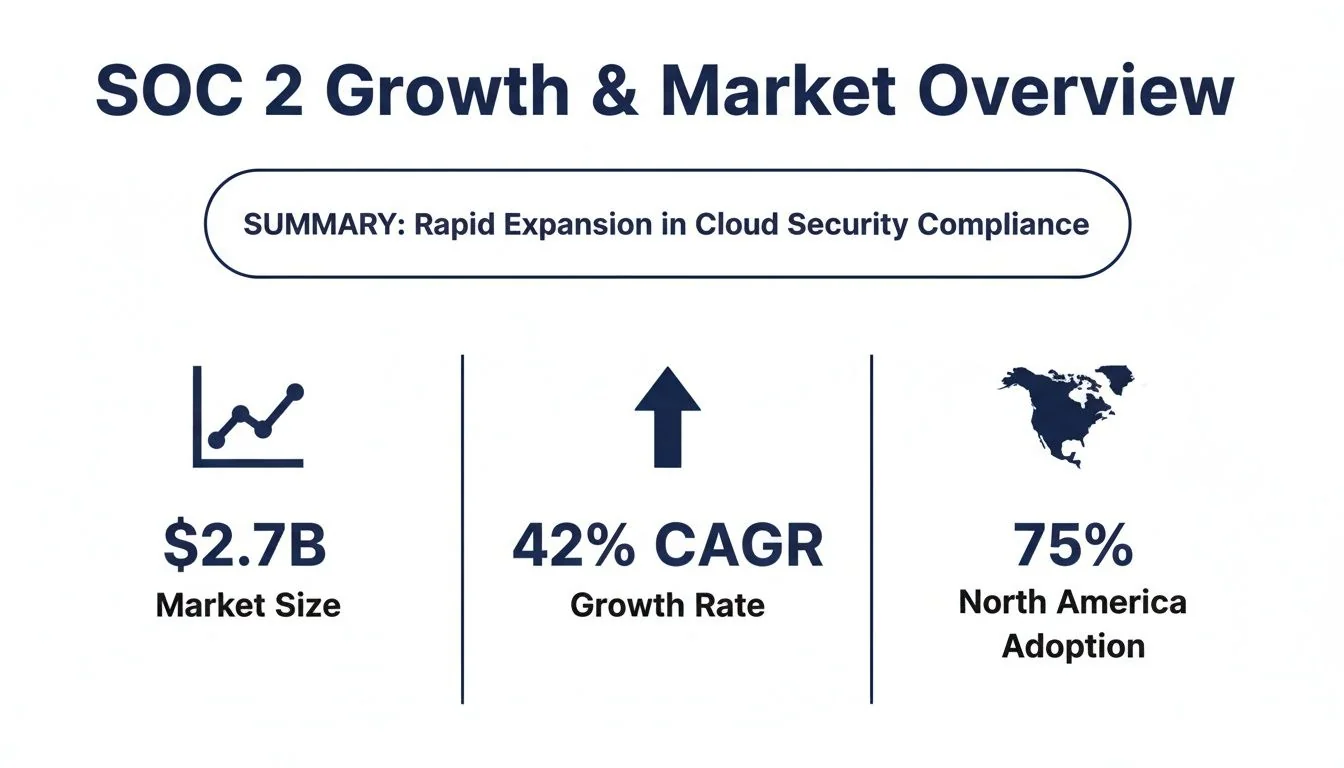
This isn’t just a trend. The demand for security assurance is intense, making these platforms a foundational piece of the puzzle for any serious tech company.
Vanta vs Competitors A Situational Comparison
Instead of a generic feature list, this table focuses on the situations where each platform truly shines. It’s designed to help you match the tool to your team’s specific context and priorities.
| Criterion | Vanta | Drata | Secureframe |
|---|---|---|---|
| Best For | Engineering-heavy teams with complex AWS/GCP/Azure stacks. | Teams prioritizing a slick user experience and sales enablement features. | Companies with custom-built internal tools or complex, non-standard systems. |
| Key Strength | The most mature and deepest library of 200+ integrations, especially for infrastructure. | A beautiful, intuitive UI and a “white-glove” support model. | Unmatched flexibility through its API and developer-centric approach. |
| Ideal User | A Head of Engineering or CISO who needs granular evidence from developer tools. | A first-time compliance manager who needs guidance and a simple workflow. | A technical security team that needs to build custom integrations and controls. |
| Pain Point It Solves | ”We need to automate evidence collection from dozens of interconnected dev tools." | "Our team is new to this; we need a tool that’s easy to use and a partner to guide us." | "Off-the-shelf tools don’t connect to our homegrown systems.” |
Ultimately, the best platform is the one that fits your workflow, not the one with the longest feature list. Vanta wins for deep-tech, Drata for usability and support, and Secureframe for customizability.
Integration Ecosystem And Depth
A platform is only as good as its connections. Shallow integrations that just check a box are a waste of time and create more manual work, completely defeating the purpose of automation.
-
Vanta: As the OG, Vanta has the most mature and extensive library with over 200+ integrations. It’s not just the number that matters, but the depth. For companies running on AWS, GCP, or Azure, Vanta’s ability to pull detailed evidence from infrastructure-as-code and developer platforms is a huge win.
-
Drata: Drata also has a massive list of integrations and is known for adding new ones at a blistering pace. Their connections are consistently praised for being reliable and dead simple to set up. Drata really nails it with HRIS and device management tools, making evidence collection for employee onboarding and offboarding a breeze.
-
Secureframe: While Secureframe has a strong set of standard integrations, its secret weapon is its focus on enterprise and custom systems. If your company runs on homegrown tools or has a messy legacy environment, Secureframe’s developer-friendly API gives you the flexibility you need.
Key Takeaway: If you’re an engineering-driven shop with a complex AWS environment, Vanta’s deep-level integrations will give you the most granular evidence. If you want to automate HR and device management flawlessly, Drata is the clear winner. And for teams that need to wrangle custom or non-standard apps, Secureframe is your best bet.
User Experience And Onboarding
Compliance isn’t just a job for the security team; it’s a team sport. The platform has to be intuitive enough for everyone from HR to sales to use without needing a four-week training course.
-
Vanta: Vanta’s UI is clean and well-established. It’s easy for users to find their assigned tasks and the onboarding process guides you through the initial setup with clear milestones. The flip side is that its maturity can sometimes make the workflow feel a bit rigid.
-
Drata: Drata is famous for its incredibly polished and user-friendly interface. Everything is designed for simplicity and clarity, making it a favorite for first-time compliance managers. Their “Trust Center” feature is a standout, letting you proactively share your security posture with prospects to speed up sales cycles.
-
Secureframe: Secureframe’s platform is powerful but has a more technical feel, which appeals to users who want a high degree of control. The onboarding is very hands-on, often pairing you with dedicated experts to help tailor the platform to your specific control environment.
Control Monitoring And Automation Quality
At the end of the day, the core job of these tools is to collect evidence and monitor controls on autopilot. The quality of that automation determines whether you save time or spend all day chasing down false positives.
-
Vanta: Vanta’s automation is rock-solid, especially for standard cloud setups. It does an excellent job mapping technical evidence directly to SOC 2 criteria, which means your engineers don’t have to waste time translating settings into compliance-speak.
-
Drata: Continuous monitoring is where Drata really flexes. The platform gives you a crystal-clear, real-time view of your compliance status across every connected system. Its automation is designed to be low-noise, only flagging high-impact issues to prevent alert fatigue.
-
Secureframe: Secureframe’s automation is highly configurable. This is a massive advantage for companies with unique controls that don’t fit a standard template. It might take more effort to set up, but you get a monitoring system that’s perfectly tuned to your environment.
If you want to go deeper on the features across the market, our complete guide to SOC 2 compliance software has more detail.
Support And Partnership Model
When you’re stuck, the quality of support you get is everything. This defines whether you have a vendor who just sells you software or a true partner who has your back.
-
Vanta: As the market leader, Vanta has a massive and experienced support organization with a ton of documentation. Their model is built for scale, which is great for teams that are comfortable with self-service but want expert help available when they need it.
-
Drata: Drata is known for its “white-glove” support. Customers rave about their dedicated success managers who provide proactive guidance through the entire audit. This high-touch model is perfect for teams new to SOC 2 who want a guide for the journey.
-
Secureframe: Secureframe positions its support as an extension of your own team, giving you access to former auditors and compliance experts. This is priceless when you’re facing tricky audit questions or need strategic advice. Their expertise-driven approach goes way beyond typical platform support.
Vanta Automation vs. Manual Audits: A Cost Analysis
When you’re staring down a SOC 2 audit, the decision between an automation platform like Vanta and the old-school manual route comes down to one question: what’s the real total cost? It’s tempting to just compare Vanta’s subscription fee to an auditor’s quote, but that misses the biggest, most painful expense of a manual audit: your team’s time.
A manual SOC 2 audit is an iceberg. The auditor’s fee is what you see above the water. Below the surface, you’ve got hundreds of hours of your best engineers pulled off product development, stuck in endless meetings, and mind-numbingly gathering evidence. This hidden cost doesn’t just blow up your budget—it kills productivity, delays features, and burns out your most valuable people.
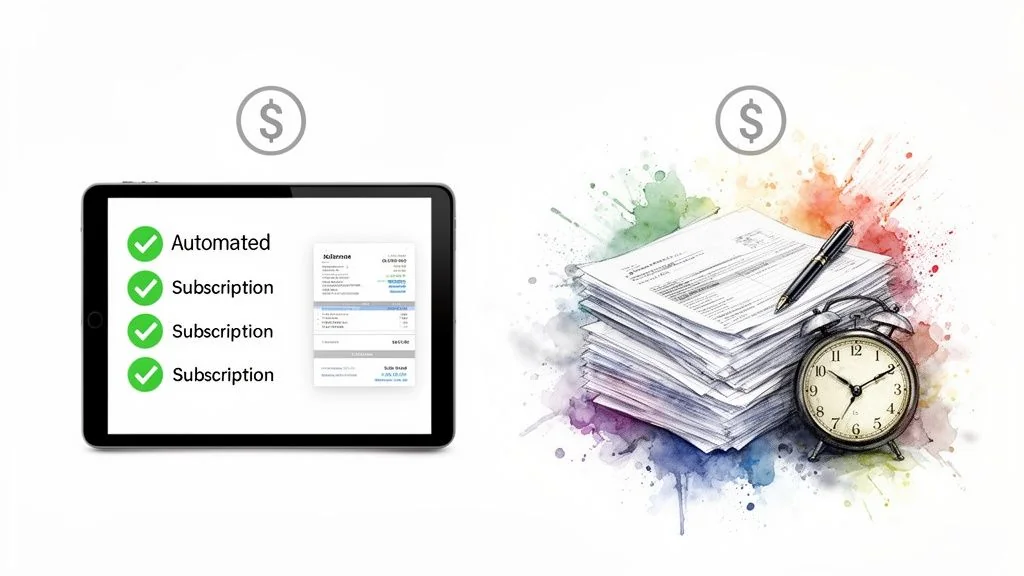
Automation flips this entire model. You get a predictable software cost upfront, but you slash the hidden operational drag. The ROI becomes incredibly clear, very quickly.
Breaking Down The Manual Audit Cost Structure
A traditional, consultant-led SOC 2 readiness project is a beast of manual labor. The costs, both direct and indirect, pile up fast.
Here’s a typical breakdown of that budget:
- Consulting Fees: Before you even talk to an auditor, you might hire a consultant for readiness assessments and policy writing. This can easily set you back $5,000 to $15,000.
- Internal Labor Costs: This is the silent killer. Your engineering and security teams will spend weeks—sometimes months—taking screenshots, pulling logs, and documenting controls. A conservative estimate of 500 hours for a team with a blended rate of $100/hour adds a whopping $50,000 in opportunity cost.
- Auditor Fees: Finally, the audit firm itself will charge anywhere from $10,000 to over $70,000 for a Type 1 or Type 2 report, depending on your scope.
The sheer inefficiency of manual evidence gathering is why so many teams feel the pain. This comprehensive guide to escaping manual data entry through automation breaks down principles that apply directly to compliance—it’s all about trading tedious human tasks for smart, automated workflows.
The Vanta SOC 2 Cost Equation
With a platform like Vanta, the cost structure is far more predictable and a lot less painful. The big upfront investment shifts from expensive human hours to a technology subscription that handles the most draining tasks for you.
Here’s how the Vanta model looks:
- Platform Subscription: You’ll pay an annual fee, typically between $7,000 and $20,000 for startups and mid-market companies. This gets you continuous monitoring and automated evidence collection.
- Reduced Internal Labor: This is where you see the magic. Vanta can cut the manual evidence-gathering workload by up to 80%. That 500-hour manual slog can be chopped down to under 100 hours, saving you tens of thousands in lost productivity.
- Auditor Fees: You still need an independent auditor, of course. But the process is way smoother. Auditors can log directly into Vanta to pull evidence, which reduces their time and can often lead to lower fees.
The ROI Calculation: A Situational Analysis
Let’s run the numbers and compare the total cost of ownership (TCO) for a typical startup going for a SOC 2 Type 2.
Scenario: Manual Audit
| Cost Component | Estimated Cost |
|---|---|
| Readiness Consultant | $12,000 |
| Internal Labor (500 hrs @ $100/hr) | $50,000 |
| Auditor Fee (Type 2) | $35,000 |
| Total Estimated TCO | $97,000 |
Scenario: Vanta-Powered Audit
| Cost Component | Estimated Cost |
|---|---|
| Vanta Subscription | $15,000 |
| Internal Labor (100 hrs @ $100/hr) | $10,000 |
| Auditor Fee (Type 2) | $30,000 |
| Total Estimated TCO | $55,000 |
In this scenario, using Vanta delivers a potential TCO reduction of over 43%. The savings come almost entirely from minimizing the drain on your engineering team. The ROI isn’t just about money; it’s about getting your team back to building your product.
This analysis makes it clear: while automation adds a new line item to your budget, it dramatically shrinks the largest and most unpredictable expense—manual labor. For a deeper dive into auditor pricing, our guide on how much a SOC 2 audit costs can give you even more context.
Ultimately, the choice comes down to how you want to pay: with predictable software fees or with your team’s unpredictable and valuable time.
Choosing Your Path: When To Use Vanta Or An Auditor
The big question for most teams isn’t if they should get a SOC 2 report, but how they should get there. This is a critical fork in the road: do you use a compliance automation platform like Vanta to get ready, or do you engage an audit firm directly for readiness consulting from day one?
The answer really depends on your company’s stage, how mature your tech is, and what you’re trying to achieve long-term.
It’s a huge mistake to see this as an “either/or” choice. Vanta and your auditor are partners, not competitors. Vanta’s job is to prepare you for the audit; the auditor’s job is to validate that prep work and issue the final report. The real decision is about who guides the readiness phase—smart software or human experts.
When To Choose Vanta For SOC 2 Readiness
For a ton of modern tech companies, especially startups and mid-market players, Vanta is the go-to starting point for good reason. Its entire value is built around speed, efficiency, and being able to scale without hiring a huge compliance team.
You should lean heavily toward a Vanta-first approach in a few specific scenarios:
- You’re an early-stage SaaS company. Your main goal is to unblock enterprise sales deals yesterday. You have a standard, cloud-native tech stack (think AWS, GCP, Okta) and need to be audit-ready in months, not a year. Vanta’s pre-built integrations and policy templates were made for this exact situation.
- Your team has zero compliance expertise. If you don’t have a dedicated GRC (Governance, Risk, and Compliance) manager on staff, Vanta basically becomes your guide. It translates the dense AICPA criteria into clear, actionable tasks for your engineering team, taking all the guesswork out of the process.
- You need continuous monitoring, not a one-off project. Your security posture changes every day. Vanta provides ongoing, automated checks that make sure you stay compliant long after the audit is over, which is crucial for keeping customer trust.
A Vanta-led SOC 2 process is perfect for companies that need speed and operational efficiency more than they need deep, custom compliance consulting. It lets engineering teams own their security controls without having to become compliance experts.
When A Direct Auditor-Led Approach Is Better
While Vanta is a beast of a tool, it’s not the right fit for everyone. In some cases, the deep, consultative guidance you get from an audit firm’s advisory practice from the very beginning is far more valuable than pure automation.
Think about hiring an auditor for readiness help in these situations:
- You have a complex or non-standard environment. If your infrastructure is on-premise, a hybrid mix, or includes a lot of custom-built internal apps, Vanta’s standard integrations might not cover your entire control environment. An auditor can help design custom controls that are tailored to your unique setup.
- You’re in a highly regulated industry. For companies in FinTech or HealthTech dealing with overlapping rules (like PCI DSS or HIPAA), an auditor’s advisory services can build a more holistic strategy to manage all those frameworks at once.
- You need strategic risk management advice. If your goal is bigger than just passing the audit—if you want to build a truly mature, enterprise-grade risk management program—the strategic advice from a seasoned audit partner is priceless. This goes way beyond what any software platform can provide.
A Framework For Your Decision
The right choice comes down to a clear-eyed look at your company’s immediate needs and your long-term vision. This isn’t just about getting a report; it’s about building a security program that lasts.
Here’s a simple decision matrix to help you think it through:
| Factor | Choose Vanta When… | Choose Auditor-Led Readiness When… |
|---|---|---|
| Primary Goal | You need to get compliant quickly to unblock sales deals. | You need to build a mature, long-term risk and compliance program. |
| Tech Stack | You use standard cloud services and SaaS tools (AWS, GCP, Okta, etc.). | You have on-premise servers, legacy systems, or custom-built applications. |
| Internal Team | Your engineering team is strong, but you don’t have dedicated compliance staff. | You have a dedicated security team that needs high-level strategic support. |
| Budget | You prefer a predictable, fixed software cost over variable consulting fees. | You have a larger budget set aside for in-depth, human-led advisory. |
Ultimately, whether you start with Vanta or an auditor, picking the right audit firm is the critical final step. Our in-depth guide explains how to choose a SOC 2 auditor and can help you find a partner that fits your company’s specific needs, ensuring a smooth and successful audit.
The Future of Compliance: SOC 2 and Beyond
Getting your SOC 2 report feels like crossing a finish line, but in reality, it’s just the starting block. It’s the foundation for a much bigger, continuous compliance program. The days of treating compliance like a one-off project are long gone. Today, it’s a strategic function—critical for earning and keeping customer trust as you scale.
This isn’t just about feeling secure; it’s driven by customer demands. A company selling in the US needs SOC 2, but that big contract in Europe is going to require GDPR and likely an ISO 27001 certification. Smart companies are seeing this coming and building a multi-framework strategy from day one.
The Rise of the Multi-Framework Approach
The trend is undeniable: businesses are tackling multiple compliance frameworks at the same time. Instead of doing SOC 2, then ISO 27001, then HIPAA in a painful, year-after-year sequence, they’re building a single security program that maps shared controls across all of them. This integrated approach saves a massive amount of time and money by cutting out redundant work.
For example, a huge number of the security controls needed for SOC 2’s Security criterion (also known as the Common Criteria) overlap with the controls in ISO 27001’s Annex A. A modern compliance strategy spots this synergy, collecting evidence once to satisfy both requirements at the same time.
This is exactly where platforms like Vanta are headed. They’re growing beyond their Vanta SOC 2 origins to become central hubs for an entire portfolio of compliance standards. These tools now have cross-mapping features that show you how nailing one control for SOC 2 also moves the needle on your ISO or HIPAA goals.
The future of compliance isn’t about collecting individual badges. It’s about building a single, unified security program that can be efficiently audited against multiple frameworks to meet diverse market demands.
Data Shows a Shifting Compliance Landscape
Industry data backs this up. The demand for SOC 2 is still incredibly strong, with 92% of organizations conducting two or more audits each year. But a bigger trend is emerging: 81% of organizations now report having or planning for an ISO 27001 certification in 2025, a big jump from just 67% in 2024.
The takeaway? While SOC 2 is table stakes, the competitive landscape is shifting. To win enterprise deals and expand globally, you need to be multi-framework ready. You can dive deeper into these compliance statistics to see how the benchmarks are evolving.
This dynamic makes your choice of an audit partner more critical than ever. It’s not enough to find a firm that just “does SOC 2.” You need a partner with proven chops across multiple frameworks.
When vetting an auditor for your long-term roadmap, ask these questions:
- Multi-Framework Expertise: Does the firm have deep experience auditing against SOC 2, ISO 27001, HIPAA, and others relevant to your market?
- Integrated Audit Capabilities: Can they perform a combined audit (like SOC 2 + HIPAA) to cut down on audit fatigue and cost?
- Platform Familiarity: Is the auditor an expert with automation platforms like Vanta? They need to know how to leverage the tool to make your audit painless and efficient.
Think of your SOC 2 report as the foundation. By planning for a multi-framework future from the start, you build a scalable compliance program that doesn’t just open doors today—it prepares you for the global opportunities waiting tomorrow.
Vanta And SOC 2: Your Questions Answered
Even with a solid plan, you’re going to have questions. Everyone does. Here are some of the most common ones we hear about using Vanta for a SOC 2 audit, with straight, practical answers.
Can I Get A SOC 2 Report With Vanta Alone?
No, you can’t. This is probably the most common point of confusion. You absolutely must hire an independent, third-party CPA firm to actually conduct the audit and issue your final SOC 2 report.
Vanta is a readiness and automation platform, not an audit firm. Its job is to get you organized, collect evidence automatically, and monitor your security controls 24/7. It makes the whole process faster for you and your auditor, but it can’t legally sign off on the final attestation.
How Much Does Vanta Cost For A Startup?
Vanta’s pricing isn’t one-size-fits-all. It changes based on your company’s size (employee count), the scope of your audit (which Trust Services Criteria you’re including), and how many tools you integrate.
For most early-stage startups, a Vanta SOC 2 subscription is going to run somewhere between $7,000 and $15,000 a year. Crucially, you have to budget for the auditor’s fee on top of that. That can easily add another $10,000 to $30,000 (or more), depending on the firm and the report type.
Think of it this way: Vanta builds the case file with all the proof, but the auditor is the independent judge who reviews it and delivers the official verdict.
Does Vanta Automatically Fix My Security Issues?
Vanta finds problems; it doesn’t fix them for you. It’s a detection and management tool, not an automated repair service.
The platform is constantly scanning your environment. When it spots a compliance gap—like an S3 bucket without encryption or an employee who hasn’t enabled MFA—it flags it and creates a task. The task will tell you what’s wrong and give you guidance on how to fix it, but your team is still responsible for actually implementing the solution.
How Long Does The Vanta SOC 2 Process Take?
Using Vanta can seriously speed up your timeline to get “audit-ready,” shrinking it to just a few weeks if your security posture is already strong. For a typical startup building its program from scratch, a more realistic timeline is 2-4 months to get all the controls in place for a SOC 2 Type 1 report.
For a SOC 2 Type 2, you have to add the mandatory observation period, which runs anywhere from three to twelve months. This means your total time from signing with Vanta to holding a Type 2 report is usually somewhere in the 5 to 15-month range.
Choosing the right audit firm is just as critical as picking the right automation platform. SOC2Auditors helps you compare 100+ verified audit firms based on real pricing, timelines, and user satisfaction, so you can find the perfect partner for your Vanta-powered audit. Get your free, tailored auditor matches and make your decision with confidence.
Comparing SOC 2 software? See our side-by-side breakdown of all 12 compliance platforms — pricing, best-for, and what each one gets wrong. Independent editorial, no pay-to-rank.