 Menu
Menu
On this page
- Which SOC 2 software should a FinTech shortlist first?
- Which tools fit a PCI-scoped payments team without a compliance owner?
- Which tools fit a counterparty security schedule?
- Which tools fit a customer’s SOC 1 request?
- When should a FinTech use the general SOC 2 guide instead?
- What must you confirm before signing?
For a PCI-scoped FinTech payments team without a compliance operator, start by comparing Thoropass and Scytale. For a staffed GRC team managing counterparty evidence and vendor-risk workflows, compare Hyperproof and Anecdotes. These shortlists reflect public sources checked on August 31, 2026; confirm package scope, assessor arrangements and counterparty acceptance before buying.
This page names first conversations. It is not a legal applicability guide, a bank-approval list, or a ranking of every SOC 2 platform. Check FinTech framework claims by condition when you need the dated matrix. Compare general SOC 2 software by buyer fit when none of the three conditions below applies.
Which SOC 2 software should a FinTech shortlist first?
Start with the condition changing the work. Payment scope changes the PCI discussion; a sponsor-bank or customer security schedule changes the evidence and vendor-risk workflow; a customer ICFR requirement changes the SOC 1 discussion. Without one of those conditions, use the general buyer-fit guide.
The table is an editorial starting order, not paid placement and not a complete ranking. A framework listing is a vendor claim unless a standards body is named. Package inclusion stays unknown until the quote.
| Condition | First compare | Alternative | Why these two | What can reverse the recommendation |
|---|---|---|---|---|
| PCI-scoped payments team without a compliance operator | Thoropass | Scytale | Thoropass markets connected readiness, evidence, and expert-auditor workflow under two legal entities. Scytale markets PCI automation with platform and consulting sold separately, and does not issue the PCI result. | A staffed GRC team, a software-only or auditor-portability policy, changed payment scope, or a package that excludes the required work. Fully outsourced processing does not eliminate PCI oversight and validation duties. |
| Sponsor-bank or customer security schedule requiring evidence, vendor oversight, and audit handoff | Hyperproof | Anecdotes | Hyperproof markets evidence, risk, third-party risk, and a dedicated audit space, with hands-on readiness as partnered services. Anecdotes markets cross-mapped enterprise GRC for a team that already staffs that work. | The counterparty’s written requirement, a missing current capability, a different auditor arrangement, or quote exclusions. Neither row claims counterparty approval. |
| Customer or user-auditor ICFR requirement | Thoropass | Anecdotes | Thoropass publishes a dedicated SOC 1 page and a connected auditor workflow. Anecdotes lists SOC 1 in the library-page footer and fits a staffed enterprise GRC program. | The user auditor says the service is outside ICFR, procurement requires portable software-only audit operations, or the buyer lacks the GRC staffing Anecdotes needs. |
Sources checked August 31, 2026. Screenshots below are public marketing pages, used to identify products; they are not tests. See the methodology. After you can name the condition, use the matcher at the end of this page to see which platforms fit your workflow.
Which tools fit a PCI-scoped payments team without a compliance owner?
Start with Thoropass for a connected readiness-to-audit model, then Scytale for guided PCI automation and separate consulting packages. Both are vendor-claimed options. Confirm the validation route, named package, and auditor policy before treating either as the purchase.
PCI SSC treats scope as cardholder-data activity and systems that can affect that environment. Outsourcing can reduce the requirements that apply directly; it does not remove provider oversight or the validation an acquirer or payment brand still expects. A product logo cannot choose your SAQ or ROC path.
Thoropass: connected readiness for a no-operator PCI team
Choose Thoropass when a PCI-scoped payments team needs connected readiness, evidence collection, and an expert-auditor workflow without a compliance operator.
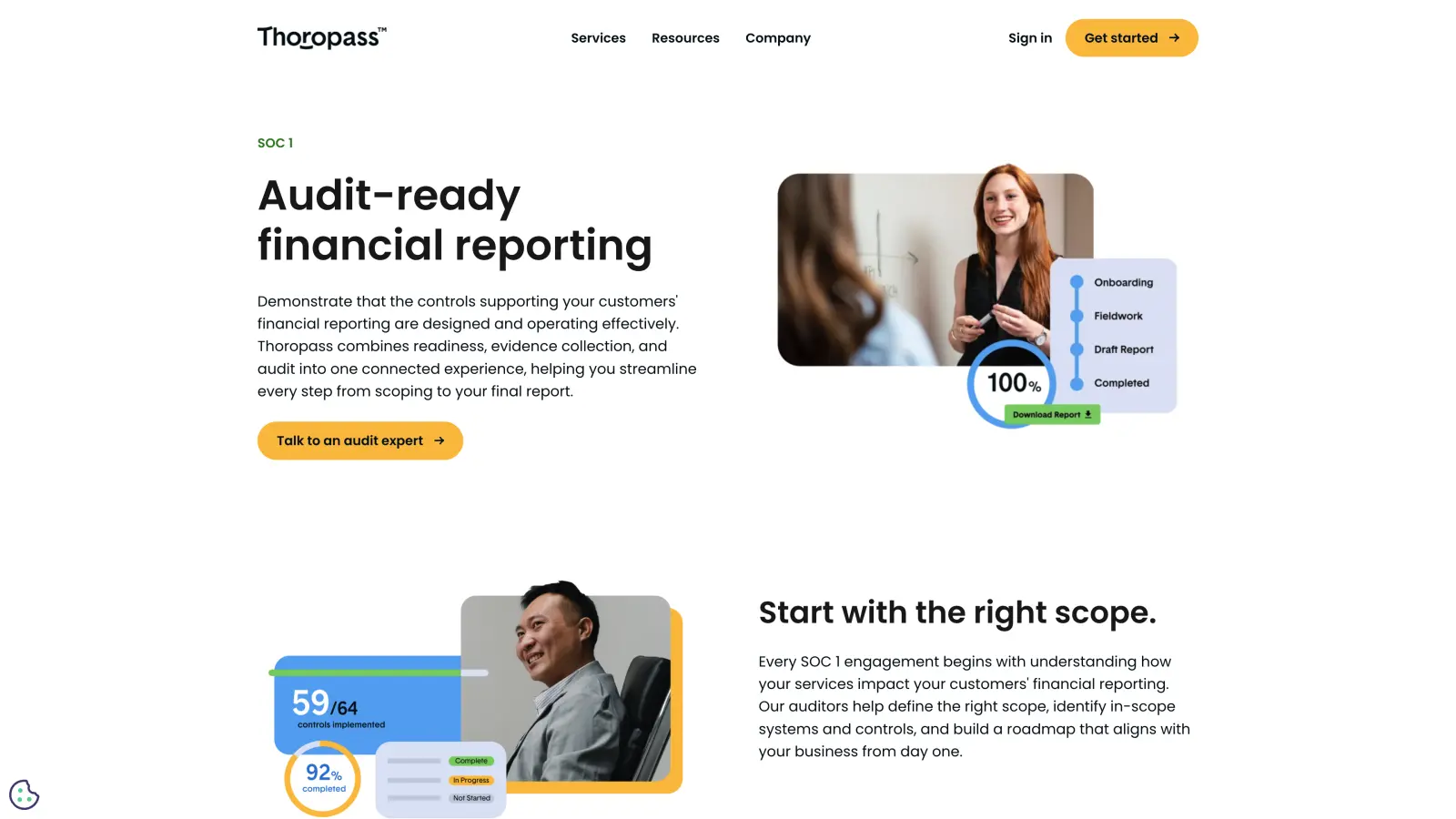
Thoropass records a PCI DSS claim and a bundled-expert model. Its SOC 1 and audit pages describe connected readiness, evidence, and expert auditors in one workflow. AWS Marketplace lists separate starting dimensions of $8,700/year for the platform and $5,800/year for the SOC 2 audit, retrieved August 24, 2026. Those floors are not an all-in PCI price, and they do not prove every independence policy accepts an affiliated examiner. The Thoropass record stores the dated claim and the two-entity structure: Thoropass, Inc. for the platform and Laika Compliance, LLC dba Thoropass Assurance for the examination.
Scytale: PCI automation with consulting sold separately
Choose Scytale when guided PCI automation and separately quoted consulting fit better than a connected auditor model.
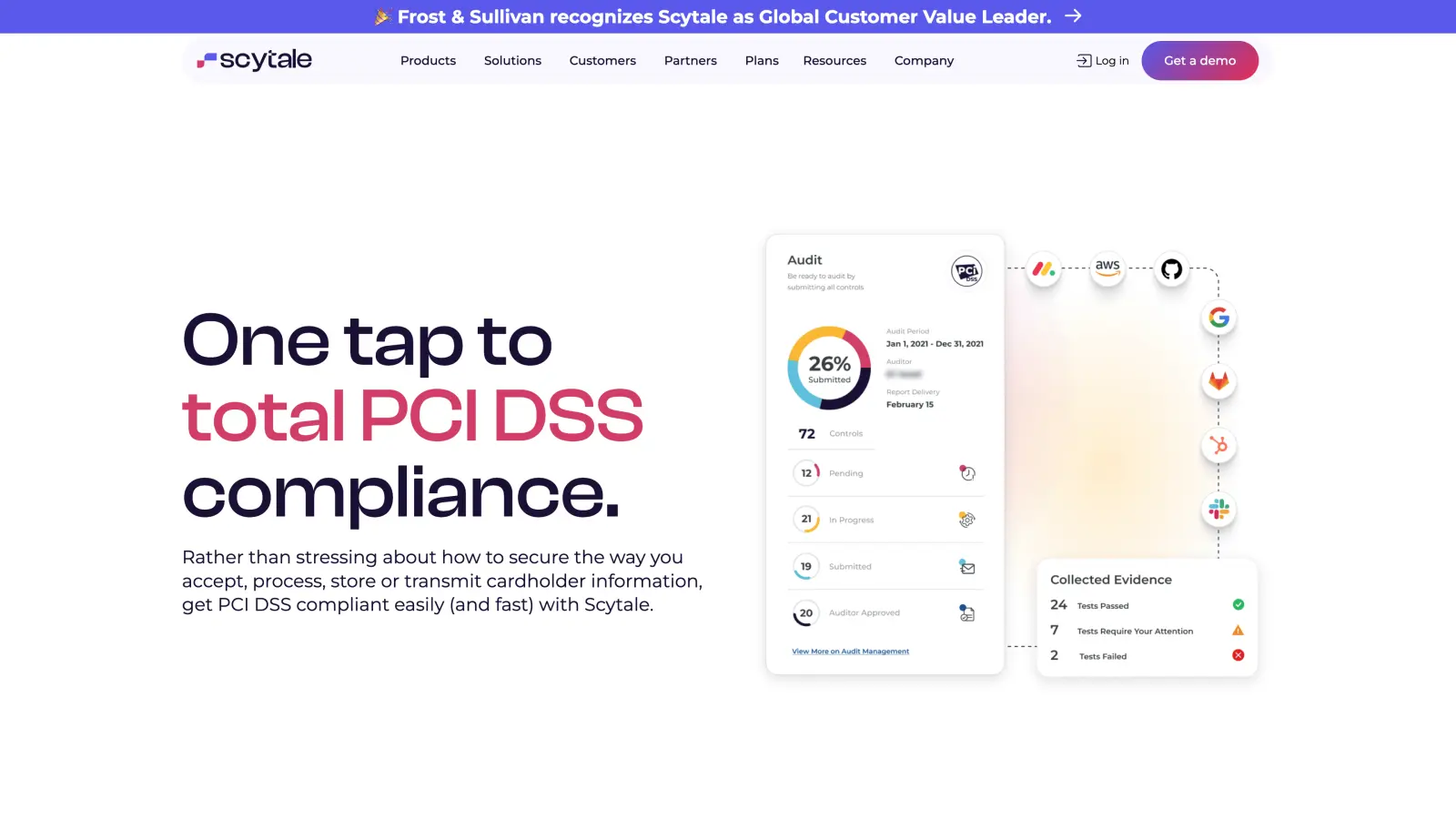
Scytale’s PCI page markets PCI automation and compliance experts. Its pricing page keeps the Build platform and LaunchReady or StayReady consulting in separate packages; Build Starter has no consulting plan. The public AWS Marketplace software floor is $7,500 for 12 months and one framework. That figure does not price PCI add-ons, consulting, or the independent assessment. Scytale does not issue the PCI result. See the Scytale record.
Hyperproof is a later fit here, not a co-finalist: the PCI claim is recorded, but this row is about who runs the work. Compare PCI DSS software evidence when the assessment route, not the first conversation, is the remaining question.
Which tools fit a counterparty security schedule?
Start with Hyperproof when the work centers on evidence, risk, third-party risk, and an audit workspace; compare Anecdotes when a staffed GRC team needs cross-mapped multi-framework operations. Verify the counterparty’s acceptance yourself. This is a software shortlist, not bank approval.
A sponsor-bank or enterprise-customer schedule usually asks for evidence operations, vendor oversight, and an auditable handoff. Compare those workflows. Do not treat either product as accepted by a named bank.
Hyperproof: evidence, third-party risk, and an audit workspace
Choose Hyperproof when a staffed GRC team is answering a sponsor-bank or customer schedule that needs evidence, risk, third-party risk, and a dedicated audit space.
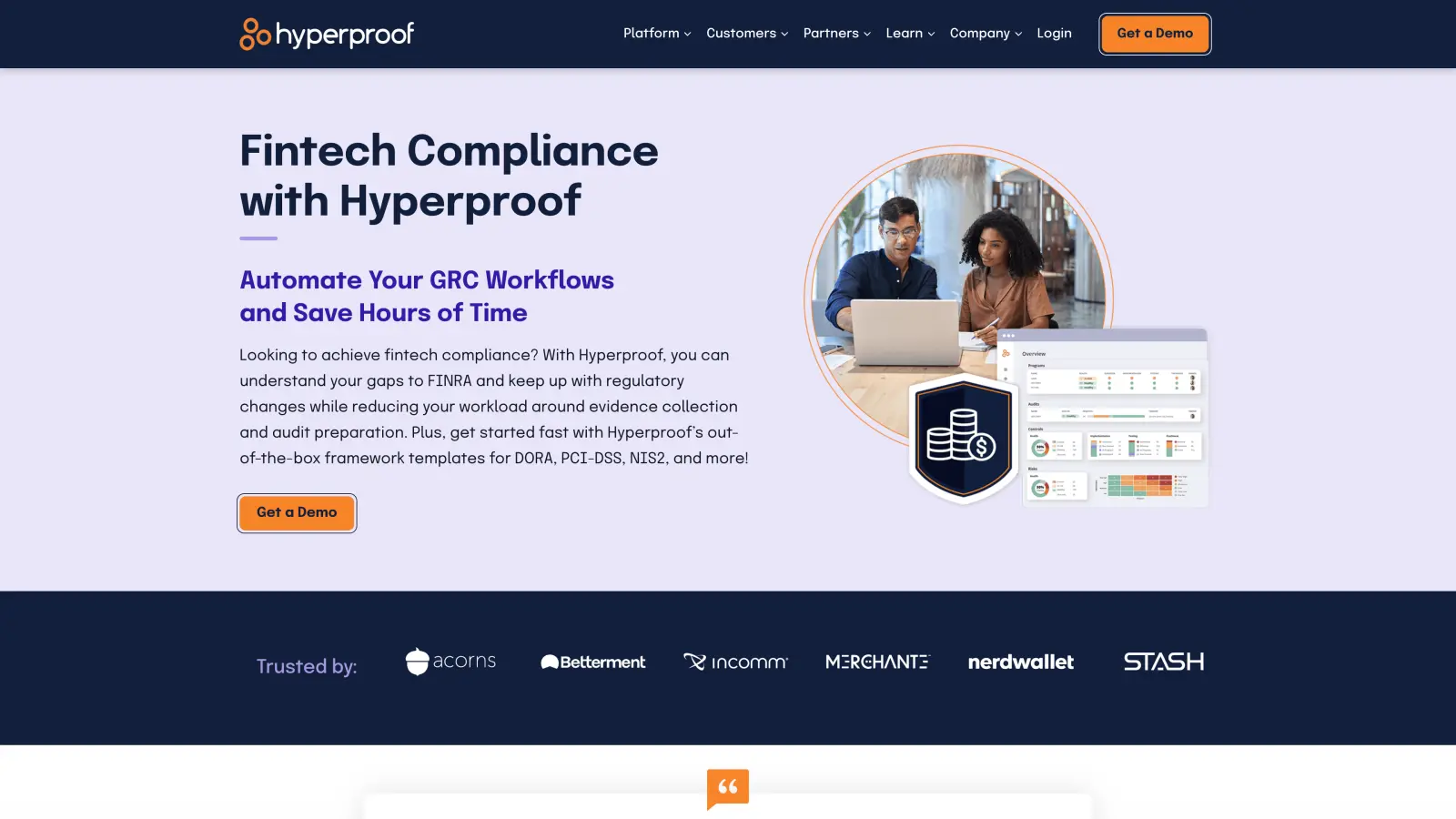
Hyperproof’s FinTech page, checked August 31, 2026, markets evidence collection, control mapping, risk, third-party risk, and a dedicated audit space. Onboarding is guided; hands-on readiness is partnered professional services rather than bundled expert delivery. Pricing is quote-only. The Hyperproof record stores a PCI claim separately; that cell is not package inclusion and not a QSA engagement.
Anecdotes: cross-mapped GRC for a staffed team
Choose Anecdotes when that same schedule will be run by people who already operate an enterprise GRC program.
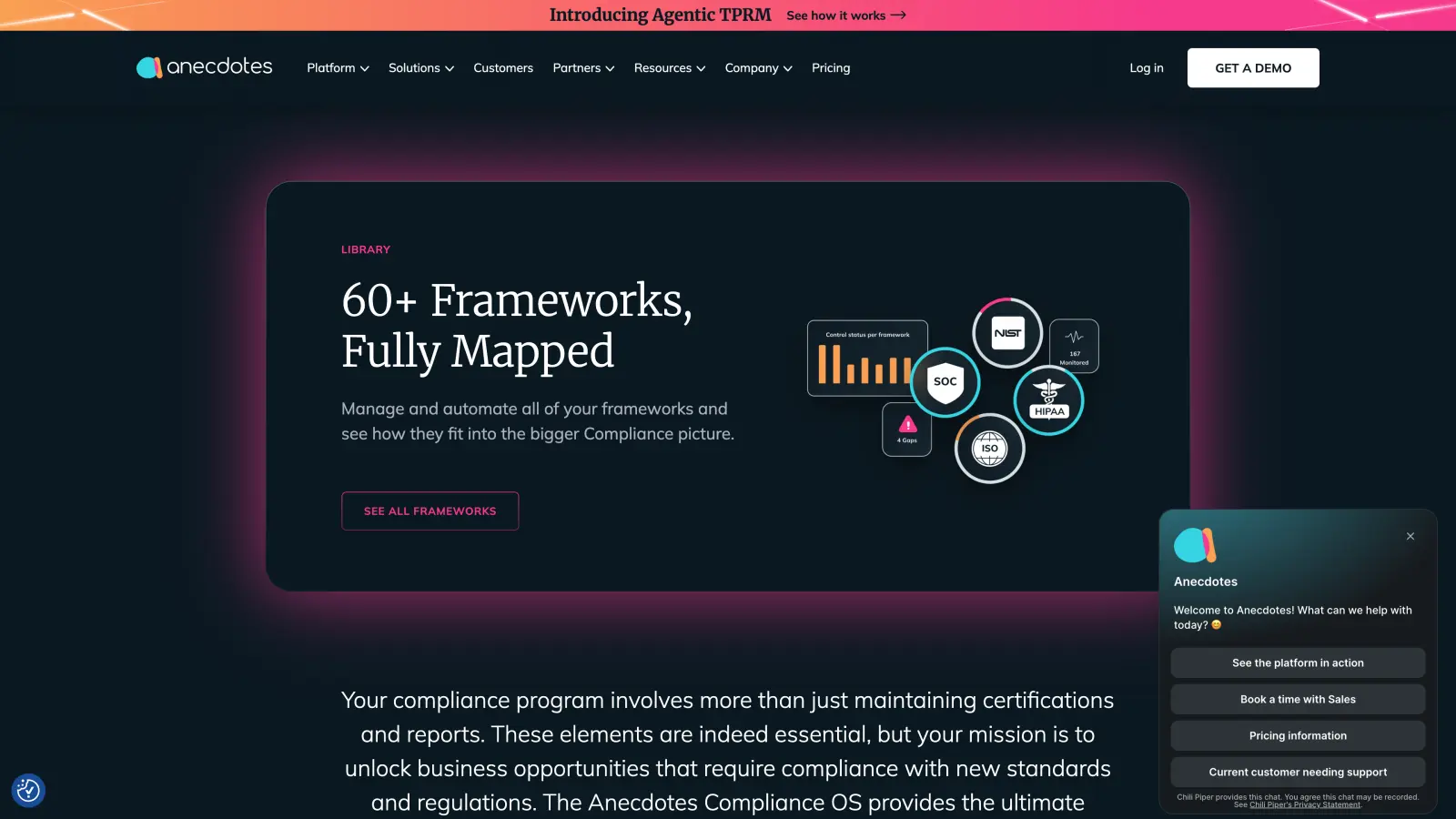
Anecdotes’ framework library and pricing page, checked August 31, 2026, position the product as enterprise GRC with cross-mapped controls. Package terms stay quote-only, so this row applies only when a staffed GRC function already exists. See the Anecdotes record.
Ask the counterparty which evidence format, vendor-risk artifacts, and auditor access they will actually review.
Which tools fit a customer’s SOC 1 request?
Start with Thoropass when the team needs connected readiness, evidence, and expert-auditor workflow; compare Anecdotes when it already has staff for an enterprise GRC program. SOC 1 matters only when the service affects a customer’s financial reporting.
The AICPA’s SOC 1 definition covers controls relevant to user entities’ internal control over financial reporting. It is not a post-SOC-2 milestone, a pre-IPO checklist item, or a consequence of calling the company FinTech. Confirm the user auditor’s request before making SOC 1 a purchase requirement.
Thoropass: dedicated SOC 1 page and affiliated examiner
Choose Thoropass for a SOC 1 request when the team wants a dedicated SOC 1 workflow and does not want to split software from the examining firm.
Thoropass publishes a dedicated SOC 1 page and a connected path from scoping through the report, with expert auditors in the same workflow. That helps a team that does not want a separate GRC stack and a separate examiner for the same engagement. It is a poor first conversation if procurement requires the software vendor and the examining firm to have no common ownership. That is a buyer policy, not an AICPA finding against the firm.
Anecdotes: SOC 1 listed in the library footer
Choose Anecdotes for a SOC 1 request only when a staffed GRC team will run one evidence pool across several reports.
Anecdotes lists SOC 1 in the framework-library footer, not as a dedicated mapped-card. The model is one evidence pool feeding several reports, run by people who already operate GRC. That is a poor first conversation for a founder-led team that still needs someone else to own implementation. A recorded SOC 1 claim does not establish workpapers, implementation help, or the independent examination in the quoted package.
When should a FinTech use the general SOC 2 guide instead?
A first SOC 2 request without payment, counterparty, or ICFR conditions is not a separate FinTech software problem. Compare the general buyer-fit options and use the FinTech reference only to test whether a condition changes the shortlist.
Non-card lending, data, or infrastructure teams often land here. Who owns implementation, whether the auditor is portable, and what the package includes are already compared on the general guide. NYDFS Part 500 and SOX internal-control reporting remain separate conditions with their own applicability rules; they can change a later evaluation without turning this article into a regulatory sequence.
What must you confirm before signing?
Confirm the requirement, framework scope, named package, implementation responsibility, auditor handoff, data and export terms, and counterparty acceptance. A framework listing is not a regulatory approval or an all-in contract. Missing package terms are sales-call questions, not assumed inclusions.
Copy these questions into the sales call:
- Requirement. PCI scope, a sponsor-bank or customer schedule, or a user-auditor ICFR need? If none, stop and use the general guide.
- Framework scope. Which systems, data flows, and reporting periods are in the engagement? Demo that scope, not a generic dashboard.
- Named package. Which SKU, add-on, and professional-services line item covers the work you just watched?
- Implementation. Who drafts policies, remediates failed controls, and stays the internal owner after onboarding?
- Auditor or assessor handoff. Who issues the SOC 2 report or PCI result, under which legal entity, and can you take the evidence to another firm next year? If you still need an independent SOC 2 examination, compare FinTech SOC 2 auditors after the software package is specified.
- Evidence leaving the building. What metadata enters the platform, what stays in source systems, and what can you export when the contract ends?
- Counterparty acceptance. Will the bank or customer review this workflow, or only the resulting report? Get that answer in writing from them, not from the vendor’s industry page.
Use synthetic examples in demos. Do not upload customer financial data, live cardholder data, or confidential bank requirements merely to evaluate software.