 Menu
Menu
Compliance automation platforms are Software-as-a-Service (SaaS) tools designed to streamline the process of achieving and maintaining information security certifications, such as SOC 2. These platforms integrate with an organization’s technology stack—including cloud infrastructure providers (e.g., AWS, Azure, GCP), identity providers (e.g., Okta, Entra ID), and HR information systems (e.g., Gusto, Rippling)—to continuously collect evidence and monitor security control configurations. This automated data collection is mapped directly to specific control requirements within frameworks like the AICPA Trust Services Criteria, enabling a more efficient and less manual audit process.
Why does this matter for someone pursuing SOC 2? The core function of these platforms is to automate the historically manual and time-consuming process of evidence gathering required by auditors. For a SOC 2 audit, an auditor must verify that controls are designed appropriately (for a Type 1 report) and have operated effectively over a period of time (for a Type 2 report). These platforms provide a centralized, persistent repository of evidence that directly maps to criteria like CC6.1 (Logical Access) or CC7.2 (Change Management). This drastically reduces the burden on engineering and compliance teams, who would otherwise spend months capturing screenshots and compiling spreadsheets to satisfy auditor requests. As demonstrated by real-world examples like Docsbot’s journey to becoming SOC 2 Type II Certified, the process is intensive, and automation is a key enabler of success.
Secureframe vs Vanta: A Head-to-Head Comparison
Choosing between Secureframe and Vanta is a critical decision for any organization preparing for a SOC 2 audit. The choice directly impacts budget predictability, resource allocation, and the overall timeline to audit readiness. It is not merely a feature comparison but a strategic selection of a partner whose operational model aligns with your company’s internal capabilities and compliance maturity.
Why does this matter for someone pursuing SOC 2? The platform you choose becomes the central nervous system of your SOC 2 program. It dictates how evidence is collected, how controls are monitored, and how you interact with your auditor. A mismatch can lead to friction, manual workarounds, and delays. Vanta, the established market leader with a vast integration library and auditor network, is often the default choice for scaling companies needing to manage multiple compliance frameworks. We cover this in-depth in our complete Vanta review. Secureframe, conversely, competes with transparent, headcount-based pricing and a high-touch customer support model, making it a strong contender for early-stage and mid-market companies where budget certainty and expert guidance are paramount for a first-time audit.
Quick Comparison: Secureframe vs Vanta for SOC 2 Readiness
For a concise breakdown, the following table compares the two platforms on criteria essential for a SOC 2 audit engagement.
| Criterion | Secureframe | Vanta |
|---|---|---|
| Ideal User | Early-stage startups & mid-market companies needing high-touch support and predictable costs for their first SOC 2. | Scaling companies & enterprises needing multi-framework support and a vast integration library to manage complex compliance. |
| Pricing Model | Transparent, headcount-based pricing. Facilitates easier budgeting for SOC 2 program costs. | Revenue-based or custom-quoted pricing, which can be less predictable for fast-growing companies and may change significantly at renewal. |
| Core Strength | Exceptional customer support with dedicated compliance experts and a user-friendly, focused experience. | Market leader with the largest integration and auditor network, providing extensive automation and familiarity for auditors. |
| Best For | Achieving your first SOC 2 attestation with a clear budget and a supportive, expert partner to guide the process. | Managing complex, multi-framework compliance programs at scale, leveraging a mature platform and broad ecosystem. |
This table clarifies the primary value propositions. Vanta offers the scale and breadth of a large ecosystem, while Secureframe delivers a focused, support-driven experience.
Why does this matter for someone pursuing SOC 2? For a CISO or compliance lead, the decision aligns with risk tolerance and internal expertise. Vanta’s scale provides the de-risking inherent in a market-leading solution familiar to auditors. Secureframe’s model provides the de-risking of having an expert partner guiding your team through the complexities of the AICPA Trust Services Criteria for the first time. The flowchart below illustrates this decision point, beginning after the strategic determination that a compliance platform is necessary for the SOC 2 audit.
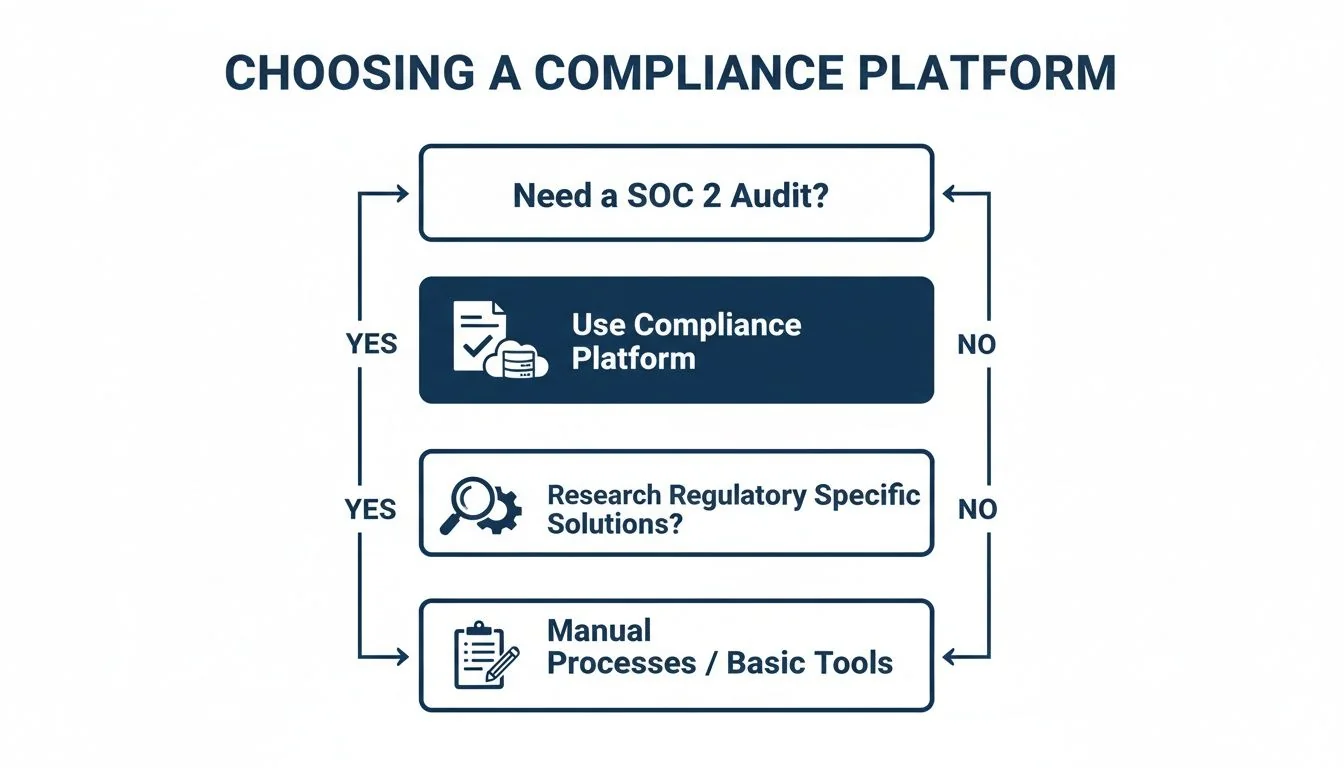
Ultimately, this comparison is about identifying which platform provides the most effective and efficient path to a successful SOC 2 attestation for your specific organization.
Feature Deep Dive for Key SOC 2 Controls
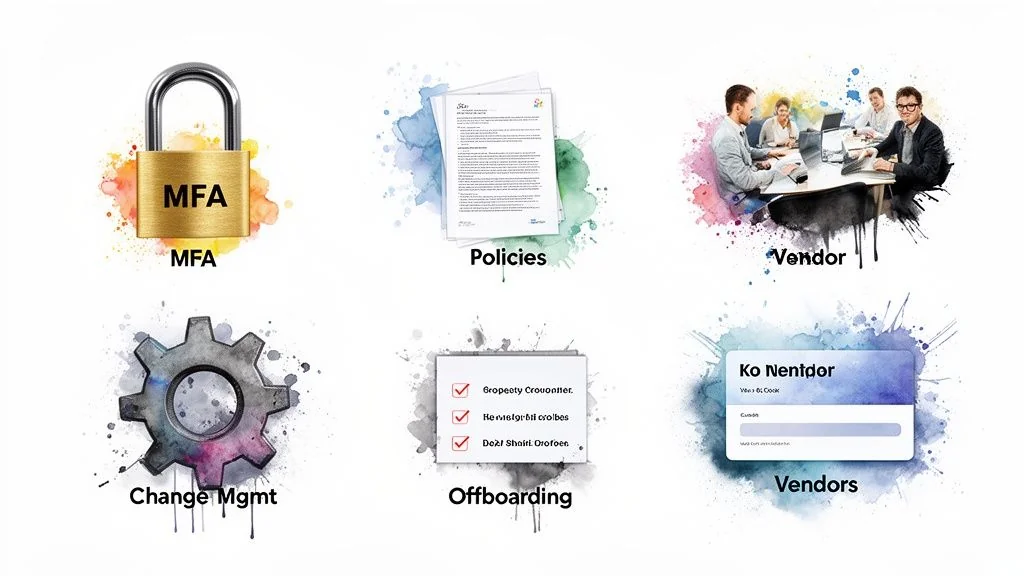
This section evaluates how Secureframe and Vanta execute the core functions required to meet SOC 2 requirements. This includes the quality of their policy templates, the depth of their continuous monitoring, and the breadth of their integrations for automating evidence collection.
Why does this matter for someone pursuing SOC 2? The practical value of these platforms lies in their ability to automate the collection of evidence for specific Trust Services Criteria. For example, to meet CC6.1, which addresses logical access controls, the platform must integrate with your cloud provider (AWS, GCP, Azure) to continuously verify that multi-factor authentication (MFA) is enabled for all administrative users. For CC7.2, which pertains to change management, the platform should monitor your code repositories (e.g., GitHub) to ensure that pull requests require peer review before being merged into production. The more comprehensive and reliable this automation is, the less manual effort is required from your team to prove to an auditor that your controls are operating effectively. We also examine how each platform handles critical supporting processes like employee security awareness training (related to CC1.2), vendor risk management (CC9.2), and employee offboarding procedures (CC6.2). For more detail, you can consult our dedicated Secureframe review. A platform’s ability to deeply automate these hundreds of tests is the primary determinant of its ROI, defining the difference between a streamlined audit and a resource-intensive manual project.
Analyzing Market Leadership and Company Scale
A compliance platform’s market share and scale are not just vanity metrics; they are strategic factors that can directly influence the efficiency and cost of your SOC 2 audit. An auditor’s familiarity with a platform’s evidence exports, control mappings, and user interface can significantly reduce friction and query time during an engagement.
Why does this matter for someone pursuing SOC 2? When an auditor is already proficient with a platform, they can proceed directly to testing controls rather than first needing to understand the tool itself. This familiarity is a tangible benefit. In the Secureframe vs Vanta comparison, Vanta is the established market leader, serving over 15,000 organizations. This scale means a significant portion of SOC 2 auditors have encountered Vanta reports multiple times. They are comfortable with how it presents evidence for common criteria like CC6.6 (Security Group Configuration) and CC7.2 (Change Management), which translates into a smoother, faster, and potentially less expensive audit for you. Furthermore, this market leadership drives a virtuous cycle of a larger integration library and faster feature development, providing assurance that the platform will support future compliance needs beyond SOC 2. You can see a broader comparison of the compliance platform landscape on cavanex.com.
Comparing Pricing and Total Cost of Ownership
The financial investment in a compliance platform extends beyond the initial subscription fee. Understanding the pricing models of Secureframe and Vanta is crucial for accurately budgeting the total cost of ownership (TCO) for your SOC 2 program.
Why does this matter for someone pursuing SOC 2? A SOC 2 audit is a significant financial and operational undertaking. Unpredictable platform costs or substantial price increases at renewal can jeopardize the budget for the entire compliance program, including the audit firm’s fees. Vanta typically operates on a custom, quote-based model, with pricing often influenced by company revenue and employee count. Initial quotes for small teams often start in the $10K–$12K range but are highly negotiable. While this can result in a favorable Year 1 price, it can also lead to significant price hikes at renewal when initial discounts are removed. Secureframe utilizes a more transparent, headcount-based pricing structure, which offers greater predictability for long-term budgeting. This transparency is particularly valuable for organizations that need to forecast expenses accurately over a multi-year compliance roadmap. You can see a detailed breakdown of how these models compare on selecthub.com. Choosing a model that aligns with your financial planning is a key risk mitigation step for the entire SOC 2 initiative.
Evaluating User Experience and Support Quality
The usability of a compliance platform and the quality of its support are critical determinants of a successful SOC 2 audit. A platform with a poor user interface or unresponsive support creates friction for the engineering and IT teams responsible for implementing and monitoring controls, undermining the platform’s value.
Why does this matter for someone pursuing SOC 2? During audit preparation, your team will inevitably encounter issues—a failing test, a misconfigured integration, or a question about how to interpret a specific SOC 2 requirement (e.g., how to evidence CC5.1, which relates to risk assessment procedures). The speed and quality of the support you receive directly impact your ability to resolve these issues and maintain audit readiness. Secureframe is widely recognized for its clean UI and dedicated, high-touch support from compliance experts, which is invaluable for teams without a dedicated in-house compliance manager. Vanta provides a mature, polished platform with extensive self-service resources and AI-driven support, designed to efficiently serve its large user base. You can see how they position themselves on their own site in this comparison on Vanta.com. The difference is often between having a dedicated compliance architect (Secureframe) versus a tiered support system (Vanta). For a team facing a complex control failure just weeks before an audit, access to immediate, expert guidance is not a luxury—it is a necessity for a successful outcome.
How to Choose Your Platform and Prepare for an Audit
After analyzing the key differences, the decision between Secureframe and Vanta can be distilled into two primary scenarios based on your organization’s SOC 2 objectives.
Choose Secureframe if your primary goal is to achieve your first SOC 2 attestation efficiently and with expert guidance. Their predictable pricing, intuitive platform, and hands-on support model are specifically designed to assist companies navigating the complexities of the AICPA Trust Services Criteria for the first time.
Choose Vanta if your organization has a complex technology stack, plans to pursue multiple compliance frameworks (e.g., ISO 27001, GDPR) in the near future, and values the de-risking that comes with a market-leading platform. Their extensive integration library and broad auditor network are built for scale.
Why does this matter for someone pursuing SOC 2? Selecting a platform is a critical make or buy decision where you choose to buy a tool to automate evidence collection. However, the platform itself does not perform the audit. The next crucial step is selecting a qualified audit firm. The platform is an evidence-gathering engine; the auditor is the human expert who interprets that evidence, tests your controls against the Trust Services Criteria, and issues the final SOC 2 report that your customers will review.
Successfully achieving SOC 2 compliance requires a symbiotic relationship between your team, your chosen automation platform, and your audit firm. A proficient auditor will leverage the data from Vanta or Secureframe to conduct a more efficient and insightful audit. They can focus on the substance of your controls—like the design of your risk assessment process (CC3.1) or the effectiveness of your incident response plan (CC5.2)—rather than on the mechanics of evidence collection. This synergy is the foundation of a smooth audit process that not only results in a clean SOC 2 report but also genuinely strengthens your organization’s security posture, providing the assurance necessary to build trust and close enterprise deals.
Comparing SOC 2 software? See our side-by-side breakdown of all 12 compliance platforms — pricing, best-for, and what each one gets wrong. Independent editorial, no pay-to-rank.