 Menu
Menu

On this page
Before you budget, see where you stand. This article covers pricing for paid readiness assessments. If you’d rather try a free DIY version first, take the free SOC 2 readiness assessment: five questions, ninety seconds, three findings written from your auditor’s chair. The tool can help you scope which gaps a paid consultant needs to address.
A SOC 2 readiness assessment is a consultative project in which an external auditor or advisor evaluates an organization’s existing information security controls against the applicable American Institute of Certified Public Accountants (AICPA) Trust Services Criteria (TSC). The objective is to identify gaps, control deficiencies, and areas of non-compliance prior to a formal SOC 2 examination. The primary deliverable is a gap analysis report with a remediation plan, which the organization uses to build and document the controls it needs.
What Is a SOC 2 Readiness Assessment?
A readiness assessment is a consultative project that works as a dry run for your formal SOC 2 audit. An auditor examines your existing controls and maps them against the specific Trust Services Criteria you need, such as Security, Availability, or Confidentiality. It is designed to uncover control weaknesses and documentation gaps that could lead to a qualified opinion or failure during the formal audit, so you can remediate them before the audit with less time pressure.
The point is to uncover problems while they are still easier and cheaper to fix, so you go into the audit knowing where you stand.
What Auditors Actually Look For
During the assessment, auditors review your documentation, system settings, and day-to-day operations, and look for evidence that controls work rather than promises. Knowing these focus areas helps you prepare.
- Policies and Procedures: Do you have a documented incident response plan? Are your security policies formally documented, approved, and disseminated to employees? They’ll check for documented controls to satisfy criteria like CC1.1 (Control Environment), which requires the organization to demonstrate a commitment to integrity and ethical values.
- System Configurations: Are your AWS or Azure environments configured to enforce security best practices? How are you enforcing access controls on your databases? This ties directly to criteria like CC6.1 (Logical and Physical Access Controls), which requires that logical access to systems is restricted to authorized users.
- Operational Evidence: Auditors want to see proof that your controls are operating effectively over time. They’ll request evidence such as logs from employee offboarding events to verify that access was revoked in a timely manner, or training records proving your team completed mandatory security awareness training, which supports CC2.2 (internal communication of security responsibilities).
Typical SOC 2 Readiness Assessment Cost Ranges for 2026
Readiness assessment prices vary. These are typical ranges for 2026, and they help with budgeting for the whole compliance effort, not just the final audit. For the audit fee itself, see our SOC 2 audit cost guide.
| Company Profile | Typical Readiness Assessment Cost Range | Key Influencing Factors |
|---|---|---|
| Early-Stage Startup (10-50 employees) | $5,000 – $12,000 | Simple cloud environment, 1-2 Trust Services Criteria (TSCs), limited systems in scope. |
| Growth-Stage Company (51-200 employees) | $10,000 – $18,000 | Multiple cloud environments, 2-3 TSCs, more complex data flows, some legacy systems. |
| Mid-Market / Enterprise (200+ employees) | $15,000 – $25,000+ | Complex hybrid infrastructure, 3-5 TSCs, multiple business units, significant remediation needed. |
These numbers reflect the time and expertise needed to thoroughly review your environment. While a startup with a simple tech stack will be on the lower end, a mid-market company with complex data flows will naturally be closer to the $25,000 mark.
Skipping this step to save money can backfire. Surprise control failures and remediation delays that a readiness assessment would have caught can raise total audit fees by 30-50%.
The deliverable is a list of findings prioritized by risk, so your team can fix the most serious gaps first.
You come away with a concrete action plan. If you’re just getting started, our SOC 2 readiness assessment checklist shows what’s involved.
Key Factors That Drive Your Assessment Cost
Readiness assessment cost tracks the auditor effort required. The price reflects the billable hours an auditor needs to interview personnel, review documentation, and inspect system configurations against the selected Trust Services Criteria.
The single biggest cost driver is your scope: which of the five AICPA Trust Services Criteria (TSCs) you include. Each TSC adds controls the auditor must test, which increases fieldwork hours and cost.
- Security (Common Criteria): This is the mandatory foundation for every SOC 2 report. It covers controls protecting information and systems from unauthorized access, unauthorized disclosure of information, and damage to systems.
- Availability: Relevant if you have contractual commitments to customers regarding uptime and system performance. This TSC covers controls related to performance monitoring, disaster recovery, and backup processing.
- Processing Integrity: Relevant if your system performs critical calculations or transactions (e.g., financial processing, data processing) where completeness, validity, accuracy, and timeliness matter most.
- Confidentiality: This covers how you protect sensitive data designated as “confidential” (e.g., intellectual property, business plans, M&A documents) through its entire lifecycle.
- Privacy: This applies specifically to how you collect, use, retain, disclose, and dispose of Personal Identifiable Information (PII) in conformity with the organization’s privacy notice and with criteria set forth in the AICPA’s GAPP.
How Scope Directly Impacts Assessor Effort
Adding even one more TSC can expand the audit work substantially and make the readiness process more intensive.
For instance, an assessment focused only on the Security criteria will have the auditor reviewing your logical access controls under CC6.1. Their job is to verify that access to data and software is restricted to authorized individuals.
But add the Availability TSC, and now they also have to test your disaster recovery plans and system backup procedures, which fall under A1.2 (The entity has a recovery plan to meet its objectives). Tack on the Confidentiality TSC, and they’ll be digging into your data encryption and specific data handling policies required by C1.1 (The entity identifies and maintains confidential information). Each addition layers on more controls to test, more documents to review, and more people to interview.
A common mistake is over-scoping: including TSCs you don’t need, which raises your SOC 2 readiness assessment cost for no benefit. Let customer contracts and business needs drive scope, not a desire to collect every criterion.
Organizational Complexity and Maturity
After scope, the next biggest factors are your organization’s complexity and control maturity. A more complex environment means a longer, more expensive assessment because the auditor has more ground to cover.
-
Company Size: The number of employees affects the effort to test HR-related controls. An assessor needs to review user access lists, interview personnel, and verify onboarding/offboarding processes. A 30-person startup is a much quicker project than a 300-person company with multiple departments.
-
Technology Stack: Is your application a simple, single-tenant SaaS application running on AWS? That’s relatively straightforward. Contrast that with a hybrid-cloud environment with on-premise servers, dozens of third-party SaaS tools, and legacy internal software. The latter is far more complex to assess, as controls must be evaluated across disparate systems.
-
Control Maturity: Are you walking into this with well-documented policies, automated security monitoring, and a history of internal reviews? If so, the auditor’s job is to verify existing controls. If you’re starting from scratch with no formal controls, they must spend significant additional time identifying foundational gaps and guiding you on how to establish controls that meet criteria like CC1.1 (Commitment to Integrity and Ethical Values).
These factors translate directly into the billable hours on your invoice. Define your scope clearly and assess your complexity realistically to get an accurate quote that matches your needs.
How to Analyze Quotes and Benchmark Pricing
When you receive multiple quotes for a SOC 2 readiness assessment, the prices can vary widely. One firm might quote $8,000 while another quotes $20,000. The gap often reflects differences in the depth of the assessment, the level of support provided, and the experience of the assessors. A low price can mean a superficial review that leaves remediation planning to your internal team.
Deconstructing the Quote
To compare quotes fairly, look at the details of each proposal. A more comprehensive engagement up front can prevent costly delays later.
- Professional Fees: What is the cost breakdown for the auditor’s time? How many hours are allocated for interviews, documentation review, and technical testing? Who is performing the work: a senior partner with extensive SOC 2 experience or a junior analyst?
- Deliverables: What tangible outputs will you receive? Every quote will promise a gap analysis, but a stronger proposal will also include a prioritized remediation plan with actionable guidance, an executive summary for leadership, and potentially templates for missing policies.
- Follow-Up Support: Does the engagement conclude with the delivery of the report, or does it include consultative follow-up calls to help your team translate the findings into a concrete project plan for remediation?
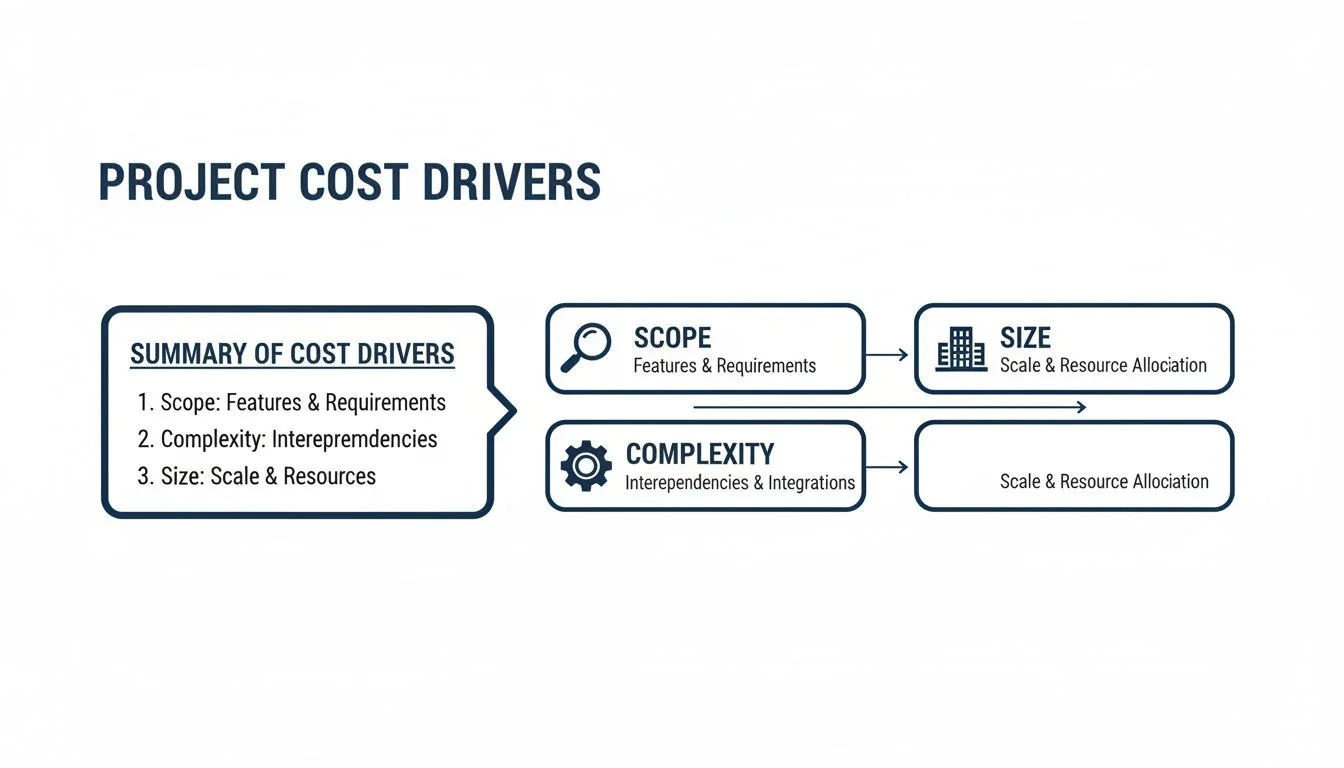
The diagram shows the main cost drivers: scope (which Trust Services Criteria you choose), company size, and the complexity of your environment.
Hypothetical Quote Comparison for a Readiness Assessment
The two hypothetical quotes below show how a lower price can come with less included, while a higher price can cover services such as re-testing and follow-up consultation.
| Quote Component | Assessor A (Boutique Firm) | Assessor B (Mid-Tier Firm) |
|---|---|---|
| Total Price | $12,000 | $18,500 |
| Professional Hours | 40 hours (Junior Analyst lead) | 75 hours (Senior Auditor lead, Partner oversight) |
| Deliverables | Standard gap analysis report listing failed controls | Detailed gap analysis, prioritized remediation plan, executive summary |
| Remediation Support | 1-hour debrief call | 5 hours of follow-up consultation, policy templates provided |
| Re-testing Fees | $2,500 for any re-testing of remediated controls | Included at no extra charge |
| Hidden Costs? | High. The re-testing fee and lack of guidance mean more internal work. | Low. The upfront cost is higher, but it’s more inclusive. |
Assessor B’s quote is 54% higher, but it includes nearly double the expert hours, more detailed remediation guidance, and no re-testing fees. Compare quotes on what they include, not only on price. To get quotes to compare, see the security service firms that run readiness projects.
Key Questions to Ask Every Potential Assessor
When you get an auditor on the phone, ask what is behind their numbers. Vague answers are a red flag. These questions press for specifics.
- What’s your exact methodology? Do you use a generic checklist, or is your process tailored to our tech stack and industry?
- How many hours of direct consultation are included? Ask exactly how much access you get to their experts for questions and guidance.
- Who is actually doing the work? Will we be working with a senior partner with a decade of experience, or a junior analyst on their first few audits?
- What does your remediation support really look like? Do you just provide a list of failed controls, or do you provide actionable recommendations and policy templates?
- How do you handle complex controls like risk management (CC3.1) or vendor management (CC9.2)? Their answer will reveal their depth of expertise in applying the AICPA criteria.
A low-cost assessor might only point out that you lack a formal risk assessment process. A stronger partner will provide templates, guide you through creating your initial risk register, and help you establish the process, closing a gap that could derail your audit.
Benchmarking Against Industry Averages
Once you have detailed quotes, compare them with the ranges in this guide. For a typical growth-stage SaaS company pursuing the Security and Availability criteria, quotes between $10,000 and $18,000 are common.
If a quote is far outside this range, ask why. A significantly lower quote might indicate a “check-the-box” assessment that misses gaps, leaving you exposed during the real audit. A much higher price should be justified by strong support, deep specialization in your industry (like HealthTech or FinTech), or a far more complex scope. Our complete guide covers what a full SOC 2 audit costs.
A cheap, shallow assessment that misses a major control deficiency can cost more in the long run than a thorough one that sets you up to pass the formal SOC 2 audit.
Budget Scenarios for Different Company Profiles
The scenarios below show estimated budgets for three company profiles. Cost follows audit scope and organizational complexity, which set the level of effort required from the assessor.
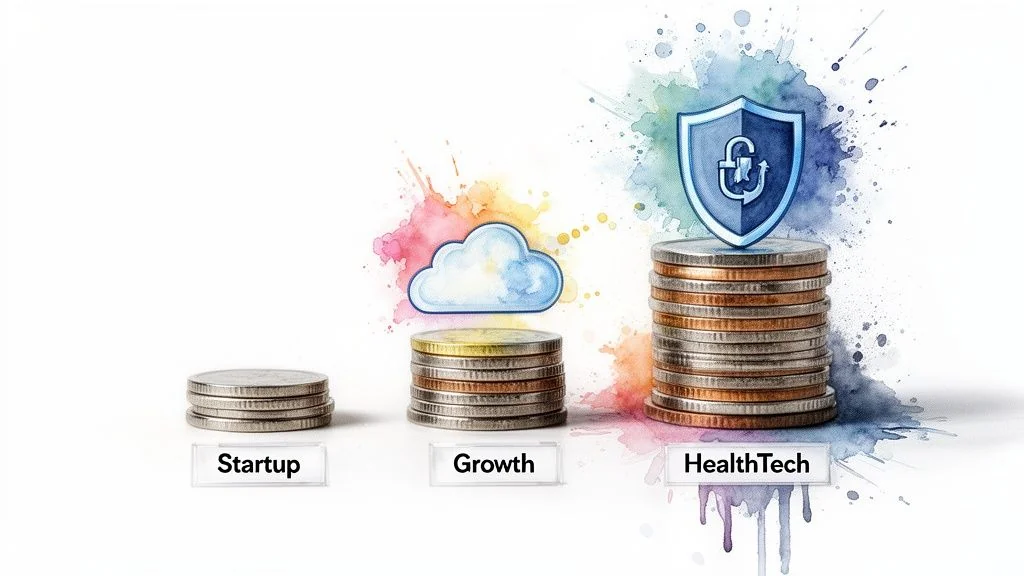
No single price fits every SOC 2 readiness assessment. Each scenario has different requirements that influence the cost.
Scenario 1: Early-Stage SaaS Startup
The first scenario is a lean SaaS startup with fewer than 50 employees. Its main goal is to land its first few big enterprise deals, and those prospects are all asking for a SOC 2 report. The tech stack is simple: one application running entirely on a major cloud provider like AWS or Azure.
- Scope: Security (Common Criteria) only. This is the standard starting point for most startups to meet basic vendor security requirements.
- Complexity: Low. A small team and a clean cloud environment mean fewer systems, people, and processes for an auditor to evaluate.
- Controls in Scope: Approximately 70 controls, all focused on the foundational Common Criteria.
- Estimated Readiness Assessment Cost: ~$8,000
For this price, the assessment will cover initial scoping, interviews with key personnel, a review of existing policies, and basic technical configuration checks. The deliverable is a concise gap report that flags critical issues like the lack of a formal risk assessment process (CC3.1) or inconsistent employee offboarding procedures (CC6.2) and gives an actionable list for becoming audit-ready.
Scenario 2: Growth-Stage FinTech Company
The second scenario is a FinTech company with 50 to 250 employees. It is moving upmarket and facing vendor security demands from large financial institutions. A readiness assessment helps it prepare to prove the platform’s security and protect sensitive customer financial data.
- Scope: Security, Availability, and Confidentiality. Their enterprise customers require assurance that the platform will not go down (Availability) and that their proprietary data is protected from unauthorized disclosure (Confidentiality).
- Complexity: Medium. The company now has a more complicated infrastructure, multiple engineering teams, and much stricter data handling rules to follow.
- Controls in Scope: Around 120-150 controls. Adding these TSCs brings in controls for disaster recovery (A1.2) and data encryption in transit and at rest, which supports protecting confidential information under C1.1.
- Estimated Readiness Assessment Cost: ~$15,000
The higher SOC 2 readiness assessment cost here reflects the auditor’s expanded workload. They must test baseline security plus the company’s backup and recovery plans and the specific controls used to maintain confidentiality. The resulting gap report will be more detailed, with remediation advice tailored to FinTech.
Scenario 3: Mid-Market HealthTech Platform
The third scenario is a mid-market HealthTech company with over 250 employees. This organization handles Protected Health Information (PHI) daily, so it must demonstrate compliance with both SOC 2 and HIPAA. A readiness assessment helps manage the regulatory and reputational risk of handling PHI.
- Scope: Security, Availability, Confidentiality, and Privacy. Privacy is typically added when PHI is in the mix, since it addresses the specific requirements for handling personal information.
- Complexity: High. This involves a large employee base, multiple product lines, and a complex web of systems that process, store, and transmit sensitive health data.
- Controls in Scope: Potentially 200+ controls, including the granular requirements of the Privacy criteria, which often map to HIPAA rules.
- Estimated Readiness Assessment Cost: ~$25,000+
The high cost is driven by the volume and sensitivity of the controls. For instance, the auditor must now validate compliance with criteria like P5.1 (Access for Individuals), which dictates how the company provides individuals with access to their own PHI. This involves detailed review of application logic and data access workflows.
This budget must cover a more intense assessment that involves multiple departments (legal, compliance, engineering) and a deep review of all controls that overlap with the HIPAA Security and Privacy Rules. For the HIPAA side of the budget, see HIPAA compliance audit cost.
Strategies to Reduce Your Assessment Bill
The final cost of a readiness assessment is not fixed. You can reduce it by making the assessor’s job more efficient, and every dollar saved can go to remediation, such as new security tools or engineering time to fix vulnerabilities. Every minute an auditor spends on administrative tasks or identifying obvious gaps is a minute you pay for.
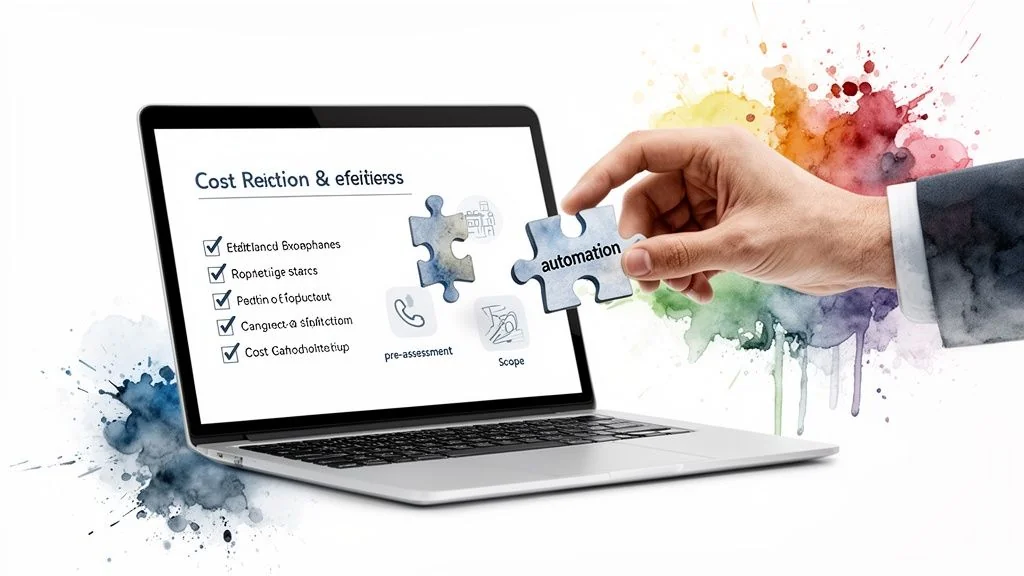
Preparation can cut readiness assessment costs by an estimated 20-40%, because it reduces the billable hours required by the audit firm.
Do a Pre-Assessment Yourself
Before engaging an external auditor, conduct an internal gap analysis using a standard SOC 2 controls checklist. That lets you identify and remediate easy gaps yourself and present a more mature control environment to the auditor.
For example, you know SOC 2 requires a formal risk assessment process (CC3.1, The entity identifies, analyzes, and responds to risks). If you lack one, draft a basic risk management policy and create an initial risk register before the assessment begins. That saves the auditor billable hours they would have spent identifying and documenting this gap and lets them focus on more complex control areas.
Lock Down Your Scope and Prevent Creep
Scope creep can drive budget overruns in SOC 2 projects. Adding another system, business unit, or Trust Services Criterion after the engagement has started adds billable hours. Define and finalize the scope before signing the engagement letter.
Pin down your scope:
- Systems: Explicitly list every in-scope application, database, and piece of infrastructure.
- Trust Services Criteria: Lock in your chosen TSCs (e.g., Security and Availability). Resist the urge to add more without a clear business or contractual driver.
- People: Identify the specific teams and individuals whose functions are in-scope for the audit.
Documenting this creates a clear statement of work that protects both you and the auditor from misunderstandings that lead to surprise costs and project delays.
A well-defined scope keeps the auditor’s effort, and your bill, focused on what you need to achieve compliance.
Use a Compliance Automation Platform
Compliance automation tools like Vanta, Drata, or Secureframe can reduce assessment cost. These platforms integrate with your cloud environment, HR systems, and developer tools to automate evidence collection, which reduces the manual labor required from your team and the auditor.
Instead of your team spending weeks taking screenshots and gathering logs, the platform collects evidence continuously. The auditor can see controls mapped to live evidence in one dashboard, spends less time gathering evidence and more on substantive testing, and bills fewer hours. See SOC 2 continuous monitoring cost for what the platform line costs.
Bundle Services to Get a Discount
Most CPA firms that perform readiness assessments also conduct the formal SOC 2 audit. When vetting potential partners, ask whether they discount a bundle of both services.
Committing to both with the same firm can create efficiencies: the firm learns your systems and controls during the readiness phase, which can shorten the formal audit. Some firms pass these savings on as a package discount.
Connecting Readiness Assessment to Audit Success
A readiness assessment identifies control deficiencies, and gives you a plan to remediate them, before they can lead to a qualified opinion or a failed audit. That is what its cost buys.
The gap analysis report produced during the readiness assessment provides a prioritized action plan, so your team can address the most serious issues first, such as establishing a formal vendor management program required by CC9.2 or implementing a change management process that meets the criteria of CC8.1. Closing these gaps well before the formal audit increases the likelihood of a clean report. Preparation can also include addressing items like those found in accounting risk management best strategies.
A major gap found halfway through an audit can derail your timeline, force a restart of your observation period, and cause months of delay. Fixing issues in the readiness phase means you enter the final audit with those gaps closed.
Upfront readiness work can also lower final audit fees: auditors work more efficiently when controls are well documented and operating effectively.
Finding the right auditor matters for both your readiness assessment and your final audit. SOC2Auditors provides pricing data across our auditor directory, helping you select a partner that fits your budget and scope. Compare your top options side-by-side at https://soc2auditors.org.
More in Cost & Timeline