 Menu
Menu

On this page
- Defining Phishing and Social Engineering for SOC 2
- Common Attack Scenarios in SaaS FinTech and HealthTech
- Mapping Risks to SOC 2 Trust Service Criteria
- Building Your Defenses with People Process and Technology
- What Auditors Look For and What Evidence to Collect
- Achieving Continuous Compliance and Audit Readiness
Phishing and social engineering are attempts to trick people into revealing credentials, approving access, sending money, or disclosing sensitive data by abusing trust, authority, urgency, or routine business processes. For a company pursuing SOC 2, they matter because they test whether your controls work in the hands of employees, not just whether policies exist on paper. The scale alone should change how you frame the issue: phishing remains the most prevalent initial attack vector, with global losses estimated at $25 billion annually, or $17,700 lost every minute, and 36% of all data breaches involve phishing according to SentinelOne’s summary of Verizon’s 2025 DBIR findings.
If you’re preparing for SOC 2, the practical question isn’t whether phishing is common. It is. The question is whether your control environment can show an auditor that staff are trained, access is protected, suspicious activity is reported, and incidents are handled in a repeatable way. A good phishing program is not a nice security add-on. It is part of the evidence trail for Security, and often for Confidentiality and Privacy as well.
Defining Phishing and Social Engineering for SOC 2
Phishing is a deceptive message, usually by email, SMS, or voice, that tries to get a user to click a link, open an attachment, share a code, reset a password, or approve a transaction. Social engineering is broader. It includes phishing, vishing, smishing, pretexting, impersonation, and business email compromise. In each case, the attacker targets a person to bypass technical controls.
From a SOC 2 perspective, that distinction matters. Phishing is one tactic. Social engineering is the control failure pattern behind it. If an employee trusts a fake invoice request, discloses a one-time code to a caller claiming to be support, or sends payroll data to someone posing as an auditor, the problem isn’t just user error. It shows a gap in awareness, identity verification, approval workflow, access control, or incident response.
Why this is a compliance issue
SOC 2 testing isn’t limited to firewalls and logs. Auditors look at whether the organization communicates security responsibilities and whether personnel know how to act securely. That is why phishing and social engineering sit squarely inside the Trust Services Criteria.
A mature program answers questions like these:
- Can employees identify suspicious requests? They should know how to verify sender legitimacy, not just spot bad spelling.
- Do high-risk actions require a second check? Wire changes, MFA resets, and exports of customer data should never rely on a single human decision.
- Can you prove operation over time? For a Type 2 report, you need evidence that training, reporting, and follow-up occurred during the audit period.
Practical rule: If an attacker can move money, reset access, or extract customer data by persuading one employee to act outside process, you don’t have a phishing problem alone. You have a SOC 2 control design problem.
What SOC 2 teams should treat as in scope
A lot of companies narrow the issue too much. They focus on email filtering and annual training. That’s not enough. In practice, phishing and social engineering affect:
| Risk area | What the attacker wants | SOC 2 concern |
|---|---|---|
| Identity | Credentials, MFA approval, password reset | Logical access failure |
| Finance | Wire transfer, bank detail change, invoice payment | Approval and authorization weakness |
| Support | Account recovery, privileged access, data export | Authentication and service desk control gap |
| Compliance | Audit requests, policy documents, payroll files | Third-party verification failure |
For a first-time SOC 2 client, I usually recommend treating phishing as a cross-functional control domain, not a mailbox issue. Security owns the framework. HR, Finance, IT, Support, and Legal all own parts of the operating evidence.
Common Attack Scenarios in SaaS FinTech and HealthTech
The FBI’s IC3 reporting on business email compromise shows how expensive impersonation can get. In a SOC 2 review, I care just as much about the failed process behind the loss as the loss itself. Phishing succeeds when a company lets identity, approval, or support actions rely on trust signals that were never designed to hold up under pressure.
The patterns differ by sector, but the control failure is familiar. An employee accepts a false identity, bypasses a required verification step, or acts outside documented workflow. For auditors, that quickly becomes a question of whether the company operated the control activities it says it has.
SaaS scenario with developer access
A SaaS engineer receives a targeted message that appears to come from an internal admin workflow. The message asks them to sign in to review an urgent deployment issue. The page captures credentials, then prompts for a second factor. If the engineer enters both, the attacker now has a usable session or enough information to try account recovery.
In SaaS, the core problem is blast radius. A single compromised identity can touch source control, cloud administration, CI/CD pipelines, internal chat, ticketing, and customer support tooling. I often see companies describe this as an email security issue, but the audit concern is broader. Auditors will ask whether privileged access was restricted, whether MFA was enforced consistently, whether login anomalies were reviewed, and whether access to production systems and secrets was segmented well enough to contain one stolen session.
FinTech scenario with business email compromise
A FinTech finance manager receives a message that appears to come from an executive asking for a payment exception before cutoff. The request references a real vendor, a familiar deal, and a plausible reason to bypass normal timing. That is classic business email compromise.
The immediate risk is financial loss. The audit risk is failure of authorization. If payment changes, wire approvals, or bank detail updates can be approved from email alone, the company has a weak control design problem that maps directly to approval workflows, change authorization, and segregation of duties. In readiness work, I usually test this by asking a simple question. Can the finance team show that every out of band payment request required callback verification, second approver evidence, and a retained record of who validated the request?
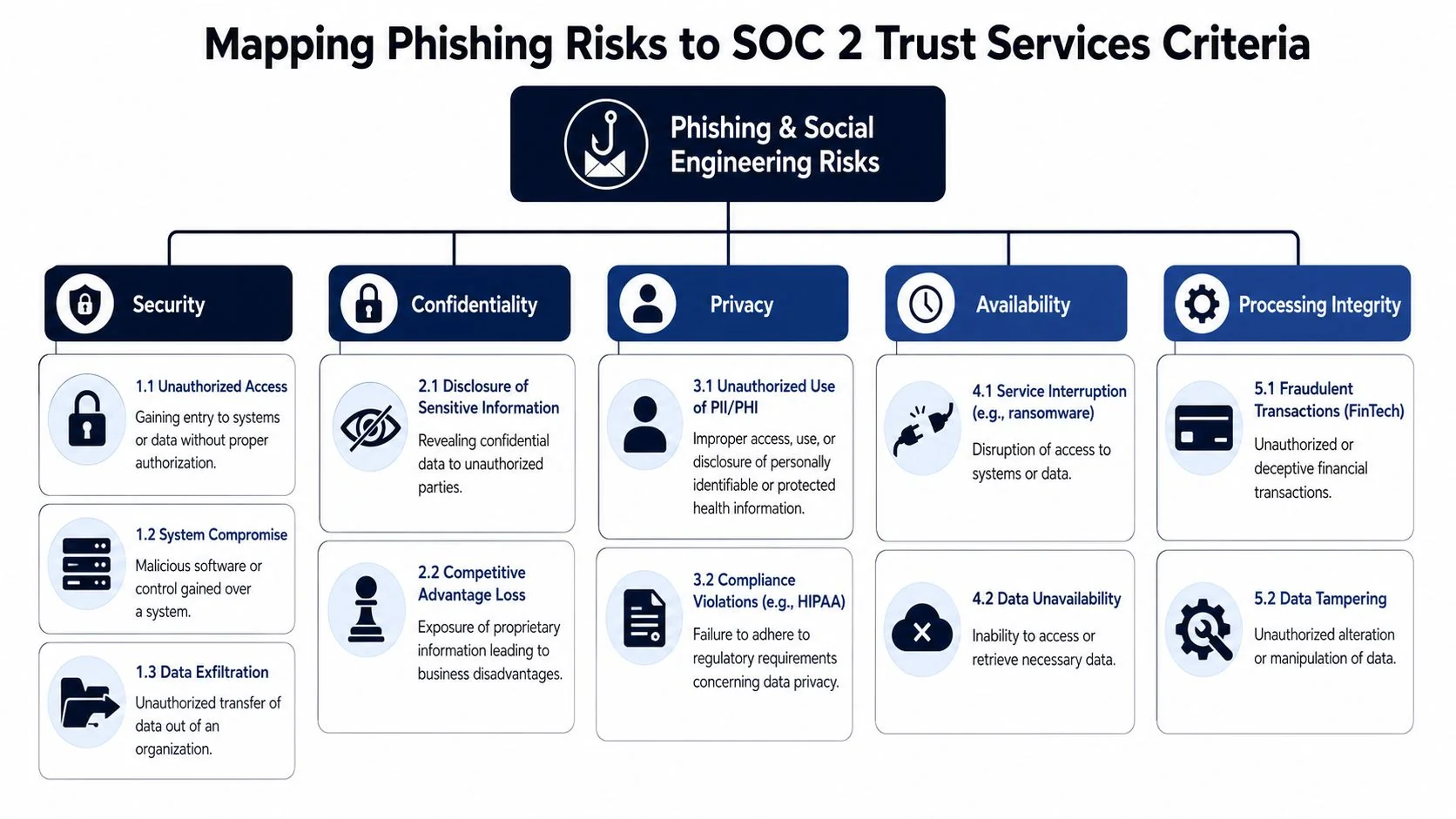
HealthTech scenario with patient data exposure
A HealthTech support agent gets a call from someone claiming to be a senior clinician who has lost access and needs immediate help before a patient handoff. The caller sounds credible, knows internal terms, and pressures the agent to skip the usual verification path. If the support team resets access or discloses account details without proper checks, patient information may be exposed.
HealthTech environments fail here because speed and patient care pressures are real. Support staff are often rewarded for resolving access problems quickly, while the control requires them to slow down, verify identity through an approved method, and document the exception path. That trade-off has to be designed into the process. If it is not, the help desk becomes an easy route around formal authentication controls and privacy protections.
Teams that want a broader view of how influence operations and manipulation tactics intersect with digital trust should study how bot networks and social-engineering campaigns shape trust across channels, not just through email.
Across all three sectors, auditors look for the same evidence pattern. Was there a defined verification procedure, was it followed, was the exception approved, and can the company produce records that show the control operated over time?
When auditors see support overrides, finance exceptions, or ad hoc access resets, they treat them as evidence that social engineering can bypass the control system.
Mapping Risks to SOC 2 Trust Service Criteria
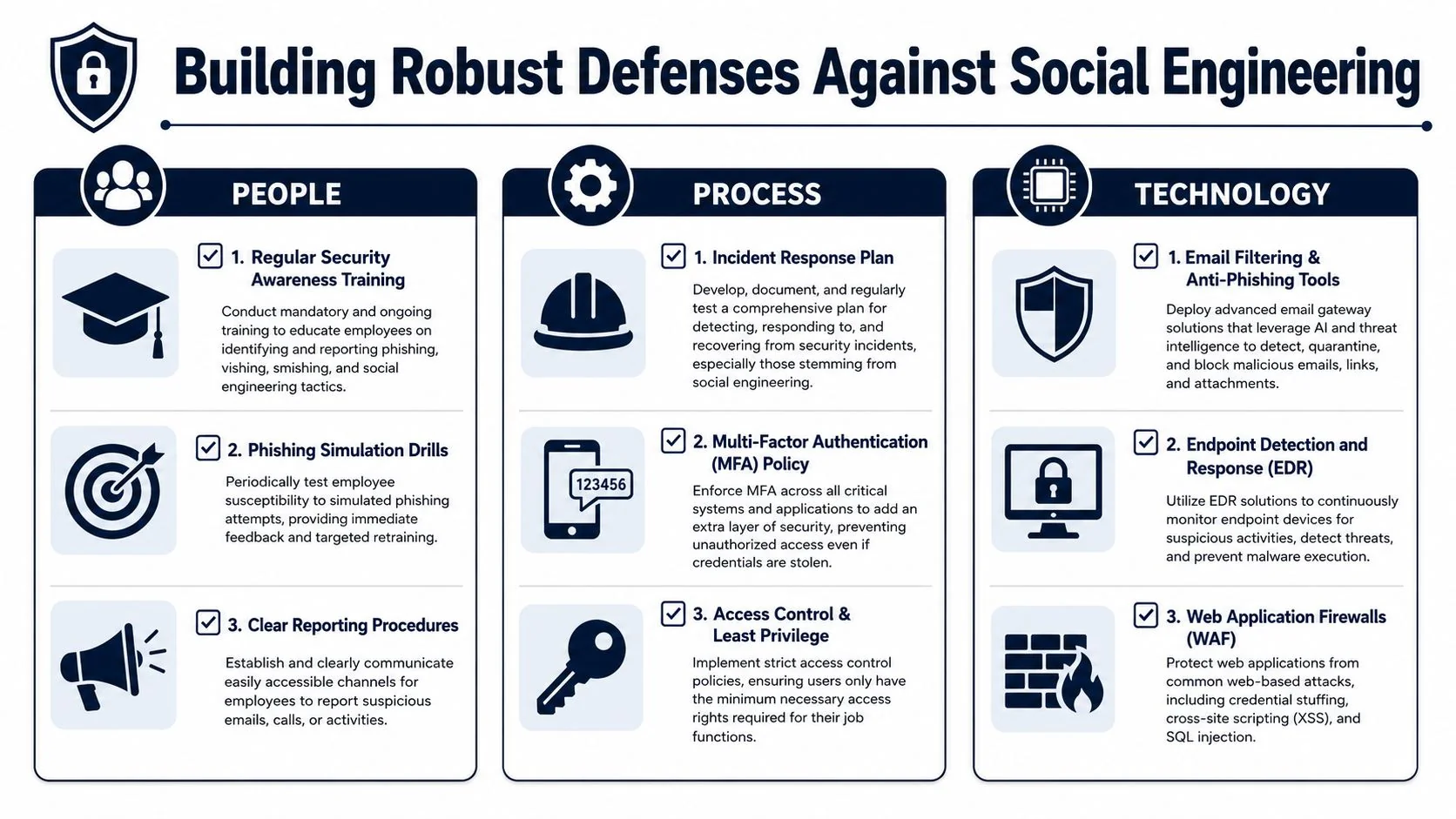
Phishing succeeds because it targets the control system, not just the inbox. In a SOC 2 review, the question is simple. Which Trust Services Criteria should have prevented the action, detected it, or limited the impact, and what evidence shows that control operated consistently?
I usually map social engineering to three audit questions first. What was the triggering request. Which control was supposed to stop it. Can the company produce evidence that the control worked over time, not just in a policy document.
CC2.2 and security awareness
CC2.2 is where auditors expect to see people trained to recognize and report security events, including phishing, impersonation, and verification failures. If awareness training exists only as annual completion records, the control is weak. Auditors want training content that matches actual job risk, a reporting path that employees know how to use, and evidence that the company updates training when attack patterns change.
For phishing and social engineering, that means finance staff should see payment diversion scenarios, support teams should see account recovery pretexts, and engineers should see credential capture and SSO abuse scenarios. A generic awareness module does not hold up well in testing. Teams building this control set should start with essential security awareness for SOC 2 and then tie the material to their own workflows, escalation paths, and repeat offender remediation.
Threats auditors map here: phishing emails, SMS lures, vishing calls, executive impersonation, fake auditor or vendor outreach.
Control failure auditors infer: employees acted on unverified requests because training was generic, outdated, or disconnected from real business processes.
CC6 and logical access
CC6 covers logical and physical access controls, but in phishing reviews the practical focus is identity verification, authentication strength, access changes, and account recovery. A phishing-resistant login flow helps. It does not solve the entire problem. If a help desk agent can reset MFA based on weak identity proofing, the attacker still gets in through a side door.
That is the trade-off many teams miss. They harden primary authentication and leave recovery, support override, and privileged action approval with less rigor. Auditors notice quickly because exception paths reveal whether the control system is designed for normal operations only, or for adversarial pressure.
Linford & Co. discusses the access control expectations around MFA and related safeguards in their SOC 2 access control overview.
Threats auditors map here: credential harvesting, MFA fatigue attacks, fake password reset flows, support pretexting, session hijacking after token theft.
Control failure auditors infer: one compromised credential led to access, or personnel could reset access without approved verification and logging.
Cross-mapping beyond Security
Social engineering rarely stays inside the Security category. It often creates direct issues under Confidentiality, Privacy, Availability, and Processing Integrity, depending on what the attacker convinces someone to do.
| Criterion area | Threat example | Likely control failure |
|---|---|---|
| Security | Stolen credentials through phishing | Weak authentication, poor user reporting, weak recovery controls |
| Confidentiality | Fake request for a customer or investor data export | Missing approval workflow, weak data release validation |
| Privacy | Caller persuades support to disclose PII or PHI | Weak identity proofing and request validation for personal data |
| Availability | User runs malware from a social engineering lure | Weak endpoint restrictions, containment, or incident response execution |
| Processing Integrity | Fraudulent bank change or transaction approval | Weak segregation of duties, weak callback procedures, poor exception logging |
This cross-mapping matters during scoping. If the engagement includes Privacy or Confidentiality, the evidence burden changes. The company now has to show that social engineering controls protect personal and confidential data handling, not just email hygiene.
A simple test exposes weak design fast. If someone posing as the CFO asks AP to change bank details, name the exact preventive control, the approver, the out-of-band verification step, and the record retained. If the answer depends on employee judgment alone, the control is not audit-ready.
What auditors expect to see in the control narrative
A defensible narrative links threat, criterion, control activity, and retained evidence. For example, a phishing-related confidentiality risk may map to approval controls for exports, ticket-based identity verification, DLP alerts, and management review of exceptions. A processing integrity risk may map to dual approval for payment changes, callback verification, and reconciliation review.
This is also where partner and leadership concerns often overlap. External manipulation is not limited to email — social engineering, insider risk, and data theft often intersect in the same business process.
Modern attacks have changed the audit conversation because the request may arrive through voice, chat, SMS, ticketing systems, collaboration tools, or a fake compliance contact. The audit standard has not changed. The control still has to prove identity, require approval, log the action, and preserve evidence. If those steps only work for email, the design gap is going to surface in testing.
Building Your Defenses with People Process and Technology
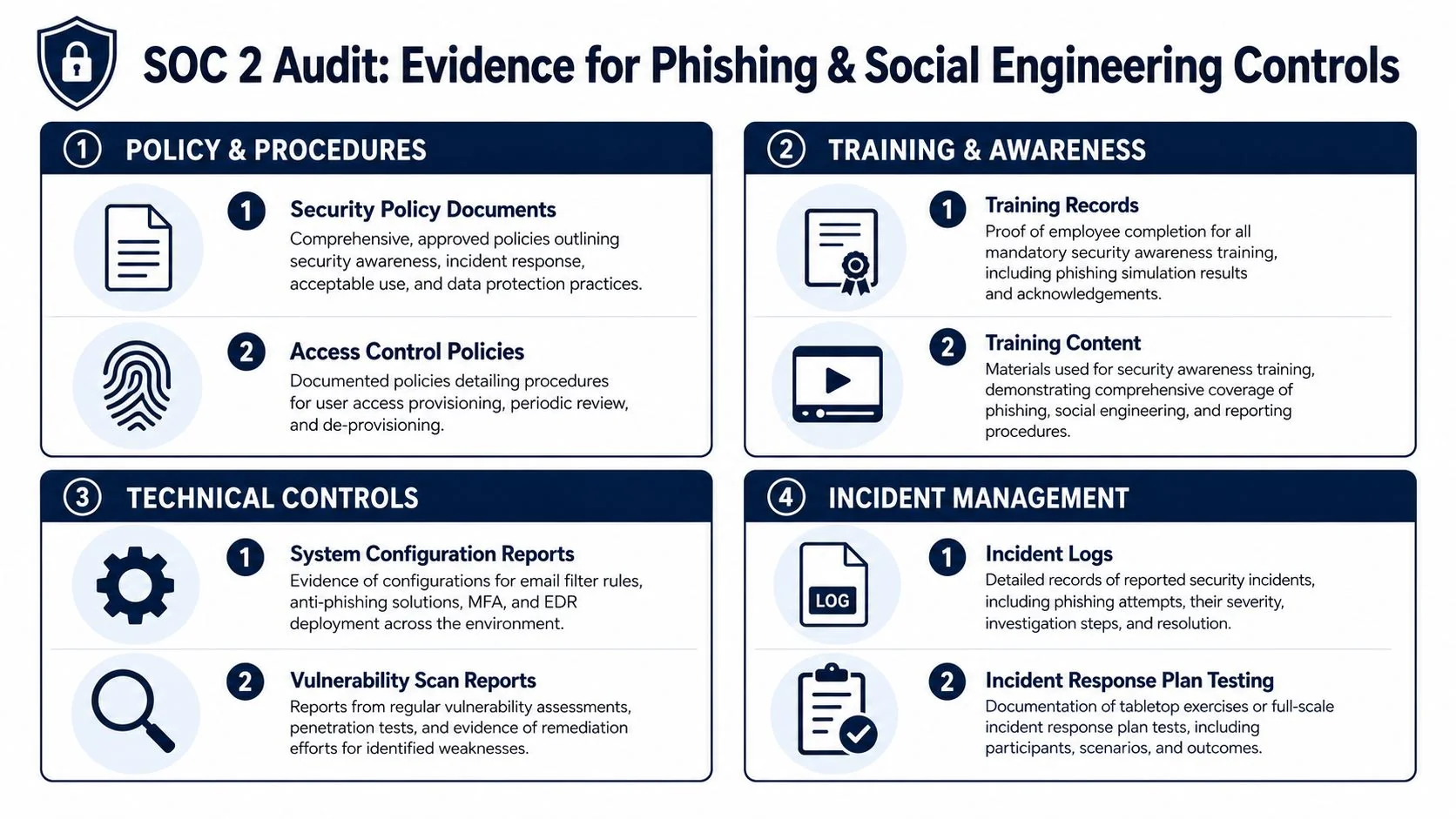
A defensible program has to operate on three layers. People need training that matches real attack patterns. Process needs checkpoints that can’t be bypassed by urgency. Technology needs to reduce the blast radius when a user still gets fooled.
People controls that auditors can trust
Effective social engineering training for SOC 2 should include realistic phishing simulations, adaptive retraining for employees who fail, and measurement of behavior change such as declining click-through rates and rising reporting rates.
That tells you what to build:
- Role-based examples: Finance should train on payment change fraud. Support should train on account recovery pretexts. Engineering should train on identity and cloud access lures.
- Adaptive follow-up: Users who fail shouldn’t just get a warning. They need targeted retraining tied to the exact behavior that failed.
- Reporting habits: A strong program teaches employees how to escalate suspicious messages, calls, and texts quickly, not just how to avoid clicking.
Process controls that stop bad decisions
Most social engineering losses happen because a legitimate process allows an unverified exception. The fix is procedural, not motivational.
Use a short control checklist for high-risk actions:
- Payment changes require an out-of-band verification step using a trusted channel already on file.
- Password resets and MFA recovery require identity proofing that doesn’t rely on caller confidence or ticket urgency.
- Data exports require documented approval and a check that the requestor is entitled to receive the data.
- Audit and compliance requests require verification of third-party identity before sharing records.
Field note: The best anti-phishing process is often boring. It forces a second person, a second channel, or a second approval into the exact step the attacker wants rushed.
A lot of teams underestimate how much this matters for evidence. A written procedure with no enforcement doesn’t help much. An approval workflow in your ticketing, finance, or IAM tool is stronger because the log proves the control operated.
Technology controls that reduce exposure
Technology should support the human and process layers, not replace them.
Use a practical stack:
| Control area | What to implement | Why it matters for SOC 2 |
|---|---|---|
| Identity | MFA for critical systems and admin roles | Limits impact of stolen credentials |
| Email security | Filtering, malicious attachment scanning, impersonation detection | Reduces obvious phishing volume |
| Endpoint | EDR on managed devices | Helps detect payload execution and containment |
| Access | Least privilege and review of privileged accounts | Lowers impact if one user is compromised |
| Reporting | Simple abuse-reporting path in mail and collaboration tools | Creates evidence that users can escalate issues |
For training design ideas tied directly to compliance expectations, I often point teams to essential security awareness for SOC 2. The key is not choosing one control. It is making sure each layer covers the failure modes of the others.
What doesn’t work is overconfidence in a single defense. MFA won’t stop a fraudulent bank detail change. Email filtering won’t stop a fake call to your help desk. Annual awareness won’t compensate for a process that lets one person export sensitive data without review.
What Auditors Look For and What Evidence to Collect
Auditors don’t issue opinions on intentions. They test design and operating effectiveness. If your phishing program exists only in presentations or policy statements, it won’t hold up.
Evidence by control family
SOC 2 doesn’t contain a discrete mandatory requirement for phishing simulations, but auditors do expect documented evidence of an active security awareness program under CC2.2, as explained in Haekka’s discussion of phishing simulations and SOC 2. That distinction matters. Simulations are one strong way to prove the program is active, but the audit target is the broader awareness control.
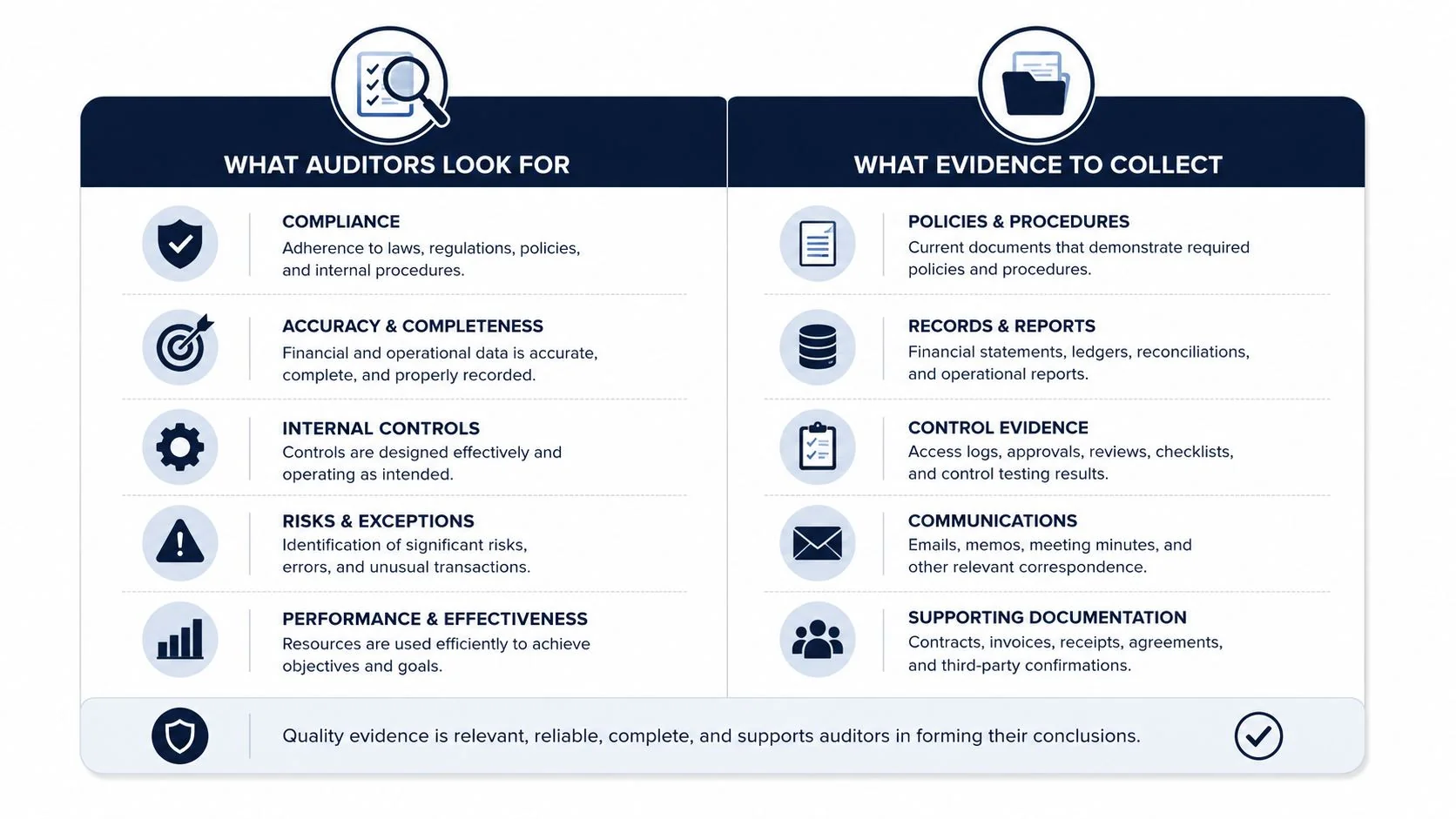
Here is the evidence I usually expect a prepared client to have ready:
- Policy evidence: Approved security awareness policy, acceptable use policy, incident response policy, and access control policy.
- Training evidence: Training assignments, completion records, acknowledgements, role-based modules, and dated content showing social engineering coverage.
- Simulation evidence: Campaign summaries, user outcomes, retraining assignments, and trend reporting over the review period.
- Access evidence: Screenshots or exports showing MFA enforcement, account lockout settings where applicable, admin role configuration, and periodic access reviews.
- Operational evidence: Reported phishing tickets, incident logs, triage notes, containment actions, and post-incident corrective actions.
- Testing evidence: Tabletop exercises involving phishing, BEC, or support impersonation, including attendees, scenario, findings, and remediation tasks.
What makes evidence persuasive
The strongest evidence has four traits:
- It is dated. The auditor needs to place it inside the audit period.
- It is attributable. The evidence shows who completed training, approved access, or handled the incident.
- It shows repetition. One training event is weak. Repeated operation is stronger.
- It ties to control language. Your artifacts should clearly support the criterion being tested.
A common readiness problem is collecting lots of screenshots but very little operating evidence. Auditors care less about what the tool can do than what your team actually did with it.
One more point matters for first-time audits. If your program is young, don’t hide the gaps. Document corrective actions, assign owners, and show the improvement path. A controlled weakness with evidence of remediation is easier to defend than a vague claim that “employees are trained.”
Achieving Continuous Compliance and Audit Readiness
Phishing and social engineering don’t stay in one format long enough for static controls to keep up. Your program has to be continuous. Train, test, report, investigate, revise. Then keep the evidence organized so you can prove that cycle operated during the audit window.
The companies that handle this well don’t treat phishing as a yearly awareness task. They treat it as an operating control that touches access, approvals, support workflows, vendor communication, incident response, and data handling. That is what turns a fragile control environment into one an auditor can rely on.
If you’re serious about transforming SOC 2 readiness, phishing defense has to be built and evidenced like any other core control. A mature program is not optional for a clean SOC 2 report. It is one of the clearest signals that your organization can withstand real-world attacks and still satisfy the Trust Services Criteria.
Need help choosing an audit firm that will evaluate these controls with the right level of rigor? SOC2Auditors helps teams compare SOC 2 auditors, timelines, pricing ranges, and fit so you can move toward a defensible report without wasting months on the wrong partner.
More in Audit Preparation